

















BY DANIEL M. PEREZ
Journal Staff
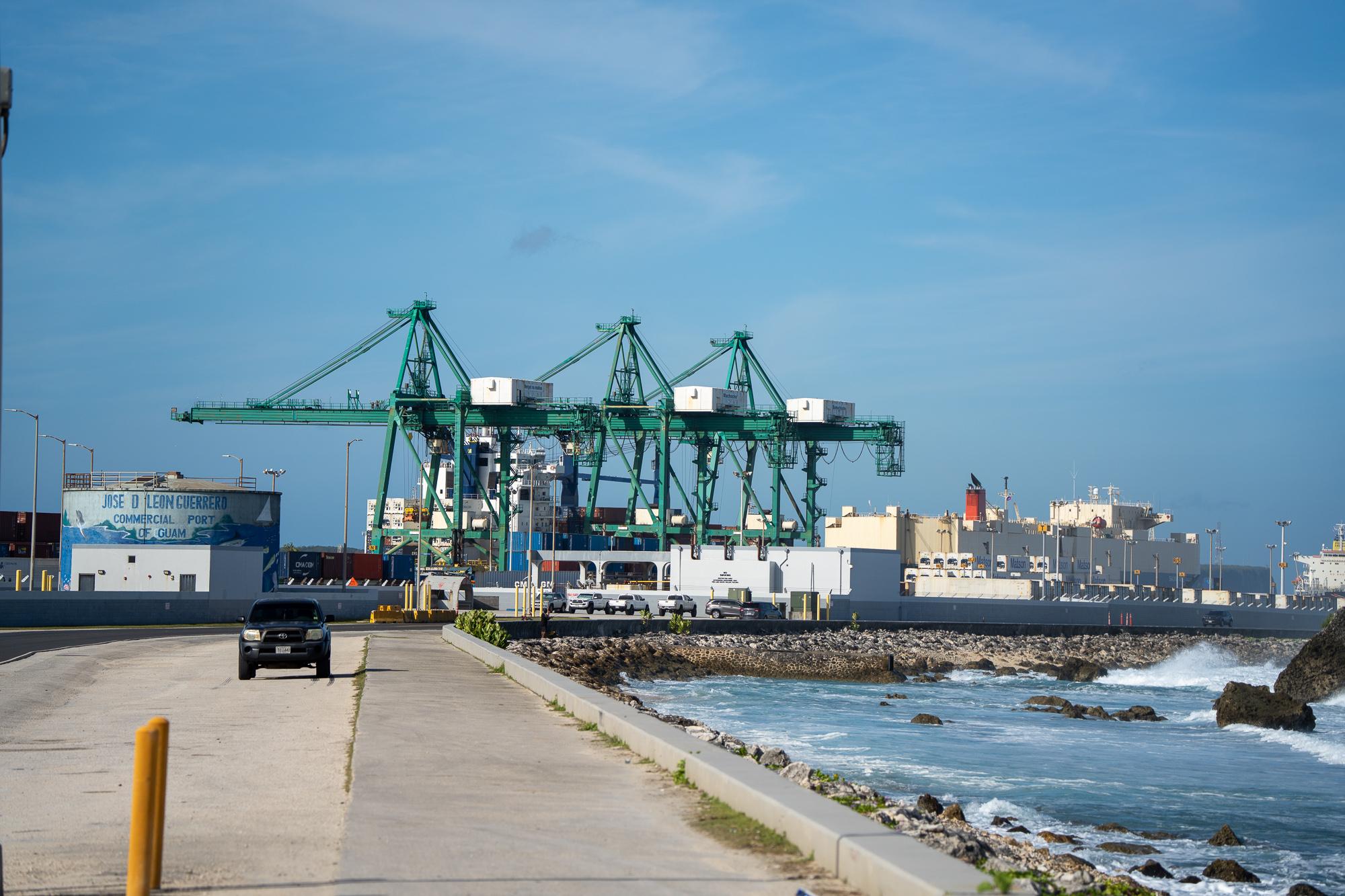
Lawmakers are considering new legislative mandates that would require all shipping containers arriving on island to be fitted with standardized high-security seals, addressing vulnerabilities in maritime cargo inspections and bolstering efforts to prevent illicit drugs from entering the territory.
Bill No. 310-38 (COR), authored by Senator Therese Terlaje, would add a new section to Title 5 of the Guam Code Annotated, establishing minimum durability and strength specifications for container seals under International Organization for Standardization specification ISO/PAS 17712. During a public hearing convened by Senator Jesse Lujan, chairman of the Committee on Transportation, Tourism, Customs, Utilities, and Federal and Foreign Affairs, lawmakers reviewed data detailing persistent cargo discrepancies at the port.
Customs officials recorded 102 seal discrepancies in 2024, including 57 missing seals, 41 broken seals, two improper seals, and two seals attached to wrong doors, followed by 91 seal discrepancies in 2025. Terlaje noted that many shippers currently utilize lightweight aluminum strap seals susceptible to accidental breakage or tampering during transit.
"These numbers highlight ongoing vulnerabilities in the cargo inspection process and raise concerns about the integrity of containers transiting through or imported to Guam," Terlaje said. "Implementing this standard for cargo transiting to or imported into Guam is intended to strengthen seal integrity, reduce the occurrence of seal discrepancies, and lower the risk of illegal drugs being introduced in Guam."
Under the proposed legislation, failure to adhere to high-security seal standards would trigger an escalating schedule of monetary penalties and administrative actions. The measure imposes a warning for an initial offense, a $25,000 fine for a second offense, $50,000 for a third offense, and $100,000 alongside potential license suspension or revocation for subsequent violations.
To address industry operational complexities, Terlaje introduced proposed committee amendments clarifying liability across the supply chain, ensuring penalties target any carrier, operator, manufacturer, shipper, or consignee determined to have had custody or control of the container when a violation occurred.
Rory Respicio, general manager of the Port Authority of Guam, voiced support for the bill's intent while emphasizing the need to align new penalty structures with existing Guam laws and operational protocols to prevent duplicative fines. Respicio explained that current port safety procedures already require immediate isolation and port police escort for any container identified with a missing or compromised seal during offloading operations.
"The principal contribution of Bill 310 is establishing a minimum high-security standard of the seal itself, we believe that is where the legislation adds value," Respicio said. Customs leadership also endorsed the proposed mandate.
Ignacio “Ike” Peredo, director of the Guam Customs and Quarantine Agency, testified that the legislation mirrors security protocols established by federal maritime authorities. "The United States Customs and Border Protection similarly requires the use of standardized mechanical seals," Peredo said, noting that establishing statutory standards will give the agency clearer authority to enforce compliance across all incoming maritime cargo.
Peredo further explained that clear regulatory definitions will assist officers in handling seal discrepancies effectively.
"Penalties and appeals clearly assign responsibilities, define applicable penalties, and provide a fair opportunity to contest," Peredo said, adding that these initiatives "strengthen CQA's ability to serve our community and fulfill its mandate."
Addressing the procedural handling of compromised seals during legislative questioning, Vincent Perez, chief of customs for CQA, clarified that specific internal units handle investigations when irregularities are flagged.
"That would be the Logistics and Support Division, but their report goes to the director, and the particular section is the Fines, Fees, and Forfeitures Section that conducts the investigations on the seals," Perez said.
When asked about officer evaluations of seal breach reports, Peredo shared that internal findings dictate enforcement actions. "A lot of these reports that are submitted to my office have recommendations in so far as their findings, and that's what I really focus on," Peredo said. "It will identify the concerns that they have to make sure that we understand that the violation that they've committed is violating what the specific statute is saying."
Terlaje expressed gratitude to enforcement officers for their role in safeguarding the port, acknowledging the operational demands placed on agency staff. "I just want to say again to customs: we're putting a big duty on you," Terlaje said. "It's a huge duty, and I know you've told us we all continue to need resources and tools, so I'm just hoping that this will be one of those that really helps you in your efforts." mbj
Journal Staff
Lawmakers are considering new legislative mandates that would require all shipping containers arriving on island to be fitted with standardized high-security seals, addressing vulnerabilities in maritime cargo inspections and bolstering efforts to prevent illicit drugs from entering the territory.
Bill No. 310-38 (COR), authored by Senator Therese Terlaje, would add a new section to Title 5 of the Guam Code Annotated, establishing minimum durability and strength specifications for container seals under International Organization for Standardization specification ISO/PAS 17712. During a public hearing convened by Senator Jesse Lujan, chairman of the Committee on Transportation, Tourism, Customs, Utilities, and Federal and Foreign Affairs, lawmakers reviewed data detailing persistent cargo discrepancies at the port.
Customs officials recorded 102 seal discrepancies in 2024, including 57 missing seals, 41 broken seals, two improper seals, and two seals attached to wrong doors, followed by 91 seal discrepancies in 2025. Terlaje noted that many shippers currently utilize lightweight aluminum strap seals susceptible to accidental breakage or tampering during transit.
"These numbers highlight ongoing vulnerabilities in the cargo inspection process and raise concerns about the integrity of containers transiting through or imported to Guam," Terlaje said. "Implementing this standard for cargo transiting to or imported into Guam is intended to strengthen seal integrity, reduce the occurrence of seal discrepancies, and lower the risk of illegal drugs being introduced in Guam."
Under the proposed legislation, failure to adhere to high-security seal standards would trigger an escalating schedule of monetary penalties and administrative actions. The measure imposes a warning for an initial offense, a $25,000 fine for a second offense, $50,000 for a third offense, and $100,000 alongside potential license suspension or revocation for subsequent violations.
To address industry operational complexities, Terlaje introduced proposed committee amendments clarifying liability across the supply chain, ensuring penalties target any carrier, operator, manufacturer, shipper, or consignee determined to have had custody or control of the container when a violation occurred.
Rory Respicio, general manager of the Port Authority of Guam, voiced support for the bill's intent while emphasizing the need to align new penalty structures with existing Guam laws and operational protocols to prevent duplicative fines. Respicio explained that current port safety procedures already require immediate isolation and port police escort for any container identified with a missing or compromised seal during offloading operations.
"The principal contribution of Bill 310 is establishing a minimum high-security standard of the seal itself, we believe that is where the legislation adds value," Respicio said. Customs leadership also endorsed the proposed mandate.
Ignacio “Ike” Peredo, director of the Guam Customs and Quarantine Agency, testified that the legislation mirrors security protocols established by federal maritime authorities. "The United States Customs and Border Protection similarly requires the use of standardized mechanical seals," Peredo said, noting that establishing statutory standards will give the agency clearer authority to enforce compliance across all incoming maritime cargo.
Peredo further explained that clear regulatory definitions will assist officers in handling seal discrepancies effectively.
"Penalties and appeals clearly assign responsibilities, define applicable penalties, and provide a fair opportunity to contest," Peredo said, adding that these initiatives "strengthen CQA's ability to serve our community and fulfill its mandate."
Addressing the procedural handling of compromised seals during legislative questioning, Vincent Perez, chief of customs for CQA, clarified that specific internal units handle investigations when irregularities are flagged.
"That would be the Logistics and Support Division, but their report goes to the director, and the particular section is the Fines, Fees, and Forfeitures Section that conducts the investigations on the seals," Perez said.
When asked about officer evaluations of seal breach reports, Peredo shared that internal findings dictate enforcement actions. "A lot of these reports that are submitted to my office have recommendations in so far as their findings, and that's what I really focus on," Peredo said. "It will identify the concerns that they have to make sure that we understand that the violation that they've committed is violating what the specific statute is saying."
Terlaje expressed gratitude to enforcement officers for their role in safeguarding the port, acknowledging the operational demands placed on agency staff. "I just want to say again to customs: we're putting a big duty on you," Terlaje said. "It's a huge duty, and I know you've told us we all continue to need resources and tools, so I'm just hoping that this will be one of those that really helps you in your efforts." mbj