Eye on the prize: unions want bigger roles in negotiation
BY KATIE AIZON
Journal Staff
For some employees or employers, support from unions or non-profit organizations contributes to ensuring safe, fair, and enjoyable workplaces.
While Guam is a “right-to-work” jurisdiction in which employees are lawfully not required to participate in unions to work, unions have been a historic part of the island's workforce since the 1960s. Local unions are advocating salary increases should reflect mainland salaries. However, Guam-based unions, unlike most mainland unions, are not authorized to negotiate salaries in their collective bargaining agreements, a responsibility that unions in Guam would like to have.
The University of Guam Faculty Union, also known as American Federation of Teachers Local 6282, represents the UOG faculty.
More than 60% of 180 full-time faculty participate in the union. Members meet once to two times a semester, with board members meeting twice a month during the school year and once a month in the summer.
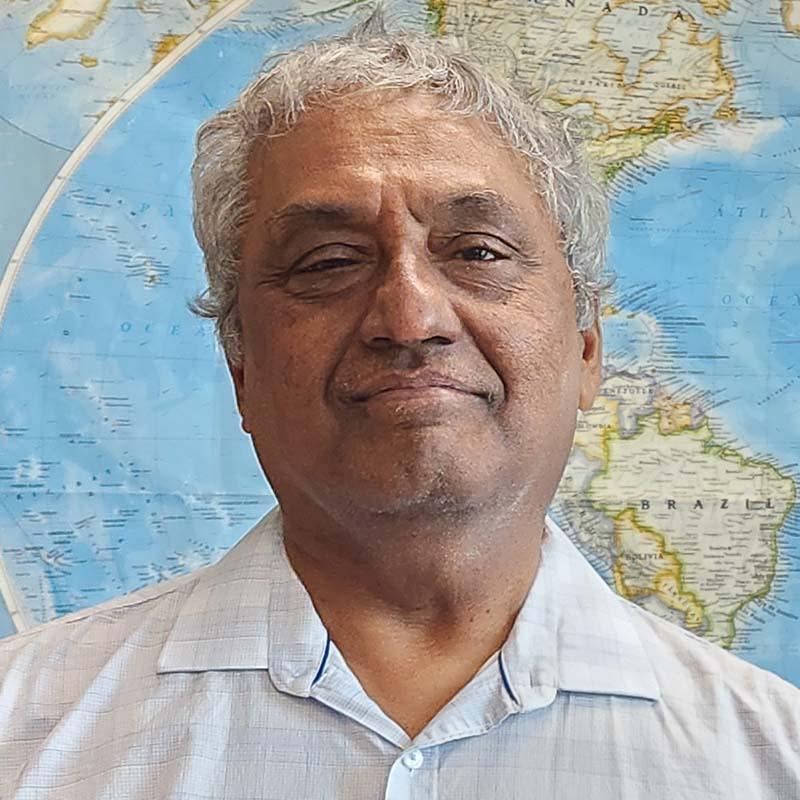
SwamyArun Swamy, president of the UOG Faculty Union, said the union’s role is to “safeguard the working conditions of the faculty,” but said that its agreement states compensation is the prerogative of the board.
“Personally, I’m not sure if that’s the right way to go about it and I’ve mentioned this towards people,” he said. “But most unions negotiate salaries directly.” Swamy said the inability for the union to handle salaries directly had caused problems for faculty as new hires were placed higher on the pay scale compared to employees who had been working with the university for two or more years, due to competitive hiring.
“One of the things that makes UOG faculty a little bit different is we have to recruit nationally and internationally, by the rules of accreditation, but also there are not a lot of people in Guam with PhD’s sitting around,” he said, explaining how this makes the competitiveness of salaries more important.
Swamy said prior to 2023 faculty members did not have any salary increases for 30 years. Faculty received a 2% increase in 2013 and a 20% increase in 2023 to match other government agencies who received raises prior.
The Guam Federation of Teachers, AFT Local 1581, is Guam’s longest active union established in 1965.
Originally only representing Guam Department of Education teachers, the union has grown to represent most GovGuam job classifications and some private sector employees.
Other than GDOE teachers, the union represents Alutiiq Logistics and Maintenance LLC bus drivers, Department of Public Health and Social Services eligibility specialists, Department of Public Works bus drivers and sanitation division, Guam Community College support staff, GDOE support staff, Guam Memorial Hospital nurses and staff, and UOG support staff.
GFT represents employees across the Department of Corrections, Guam Behavioral Health and Wellness Center, Guam Customs and Quarantine Agency, Guam Fire Department, Guam Police Department, Guam Waterworks Authority, and the Port Authority of Guam.
According to Sanjay Sharma, vice president of GFT, union officials and members do not disclose membership figures but said GFT’s scope of representation is 10,000 employees across Guam. Executive members meet bi-weekly and general members meet bi-monthly.
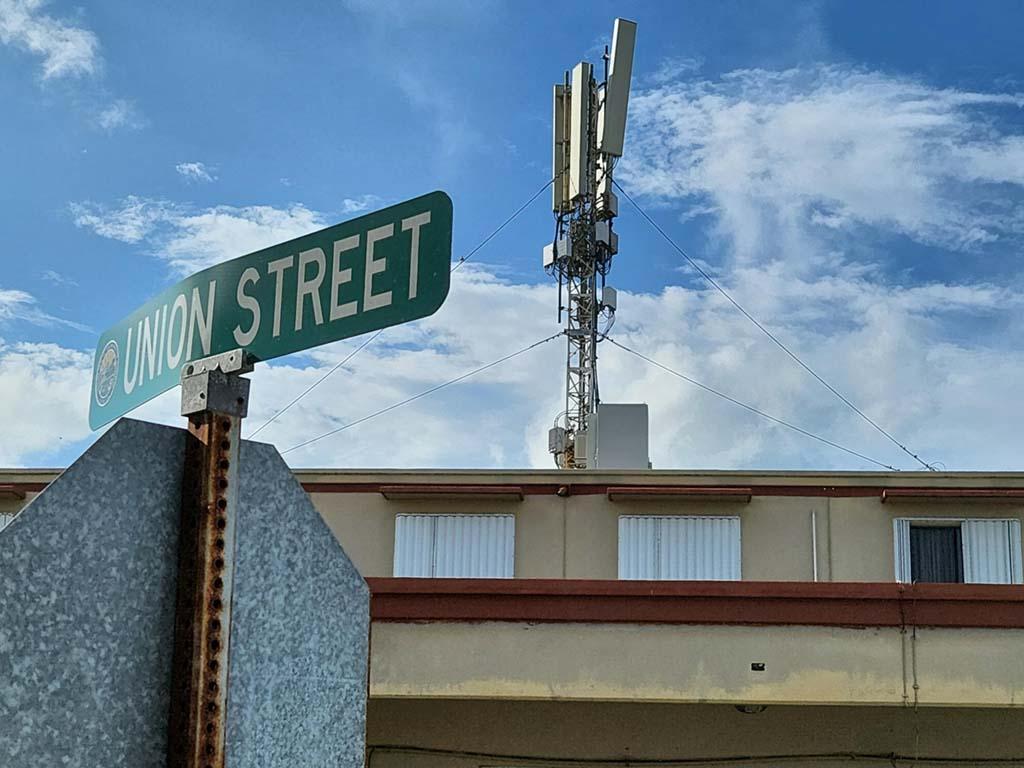
The Union Street sign near the Mangilao Guam Federation of Teachers headquarters
GFT recently released a wage analysis comparing wages across 242 occupations in Guam compared to 54 areas including states and other territories, based on Bureau of Labor statistics May 2025 data. GFT concluded in 152 of 235 occupations Guam ranks last or second last. The study also reported educators in Guam are paid a median of $46,250 compared to a national median of $60,570. The last increase to the educator pay plan occurred in 2022, providing a 20% base adjustment.
“GFT holds a collective bargaining agreement covering many public sector employees, but we are not permitted to negotiate wages,” Sharma said.
“Teacher pay is set by the educator pay plan, which is established in law. Many others fall under the General Pay Plan. Only the legislature and the governor can change those. For our private sector employees, yes, we negotiate wages.”
Sharma said the union seeks to encourage legislative officials to fund a wage study or appropriate the money. GFT wrote in the report an additional option would be to “authorize bargaining over salary.” He said the legislature could “give teachers and their union standing to negotiate compensation directly and the legislature gains a partner in solving this instead of a petitioner outside the door.”
In response, Sen. Vincent A. V. Borja introduced Bill 351-38 to grant GDOE independent authority to establish its own educator pay plan on Aug. 24, with GFT supporting the initiative.
"The Guam Federation of Teachers supports Bill 351-38. We thank Sen. Vince Borja for introducing it and for moving fast and we thank the senators who signed on with him,” Sharma said.
GFT sent coverage of its wage analysis and recommendations to every senator with Borja, chairperson for the Committee on Education, Libraries, and Public Broadcasting, responding immediately.
“Sen. Borja responded the same day with a draft bill. GFT then proposed amendments and some of those amendments are in the bill,” Sharma said.
However, Sharma said the bill does not raise anyone’s pay but creates authority and standards.
“Our salaries are to reach at least ninety-five percent of the national average within five years. The money still must be appropriated. The earliest raise reaches a classroom is Oct. 1, 2027. Passing this bill is the start of the work,” he said.
Sharma said the bill also addresses GDOE’s teacher shortage going into the 2026 school year.
“Guam opened this school year with 105 teacher vacancies, and we still have about 50 vacancies going into almost a month of school. Our core classroom teachers average about $61,465 a year. The national average is $76,552. That is a gap of about $15,000,” he said.
“It is why we keep losing teachers to off-island districts. Every teacher who leaves costs the taxpayer money to replace. It also costs students a year they do not get back.”
Other local unions include the United Airlines Association of Flight Attendants, Council 65; the Air Line Pilots Association, International; the National Air Traffic Controllers Association and the American Postal Workers Union, Agana, Local 6255.
While unions bargain on behalf of employees, the Employers Council of Guam represents employers.
The Employers Council of Guam, established in 1966, currently works with 65 companies across different industries. The organization aids employers “create great places to work” by providing relevant information on business requirements, management training, and consulting.
GayleCatherine “Cait” Gayle, executive director of the Employers Council of Guam, said helping employers helps employees.
“ … we work with employers for them to provide the best workplace possible and when doing so it’s a benefit to the employees as well, because employees that are working well also create great workplaces,” she said.
Gayle said when it comes to increasing salaries, employers need to determine several factors before considering adjusting the pay scale.
“The thing about salaries is they are reflective of their markets and what their markets are capable of paying,” she said. “[As an employer] if you pay a certain number of salaries will you be able to maintain your buildings, purchase your books, and be able to do all these other things that come in?”
Gayle said government assistance would be beneficial for employers and employees to lower the cost of living, a primary contributor preventing more frequent wage increases on island.
“There’s a lot of other things you could look at but it requires government involvement whether its tax credits or other supplemental things that help in terms of addressing the cost of living and bringing it down would be very beneficial,” she said. mbj
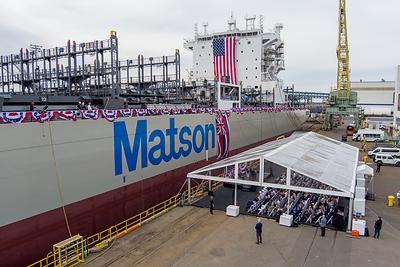
Matson Inc. and Hanwha Philly Shipyard Inc. held a christening ceremony for the Aloha Class Vessel Makua, set to serve Guam in the first quarter of 2027, at the Hanwha Philly Shipyard, Philadelphia on Oct. 12.
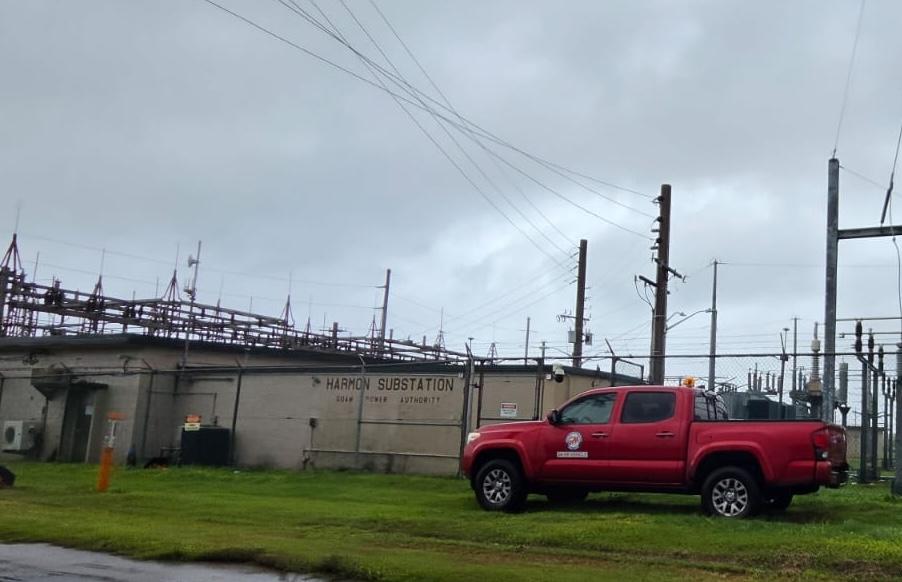
Essential infrastructure, commercial fuel stations, and private health facilities across Guam are swiftly reopening following the passage of Super Typhoon Champi, with key transportation hubs and utility providers moving into full recovery status.
Just hours after Super Typhoon Champi passed south of Guam, President Donald Trump approved Gov. Lourdes A. Leon Guerrero's request for an emergency declaration, which authorizes the Department of Homeland Security's Federal Emergency Management Agency to coordinate emergency assistance.
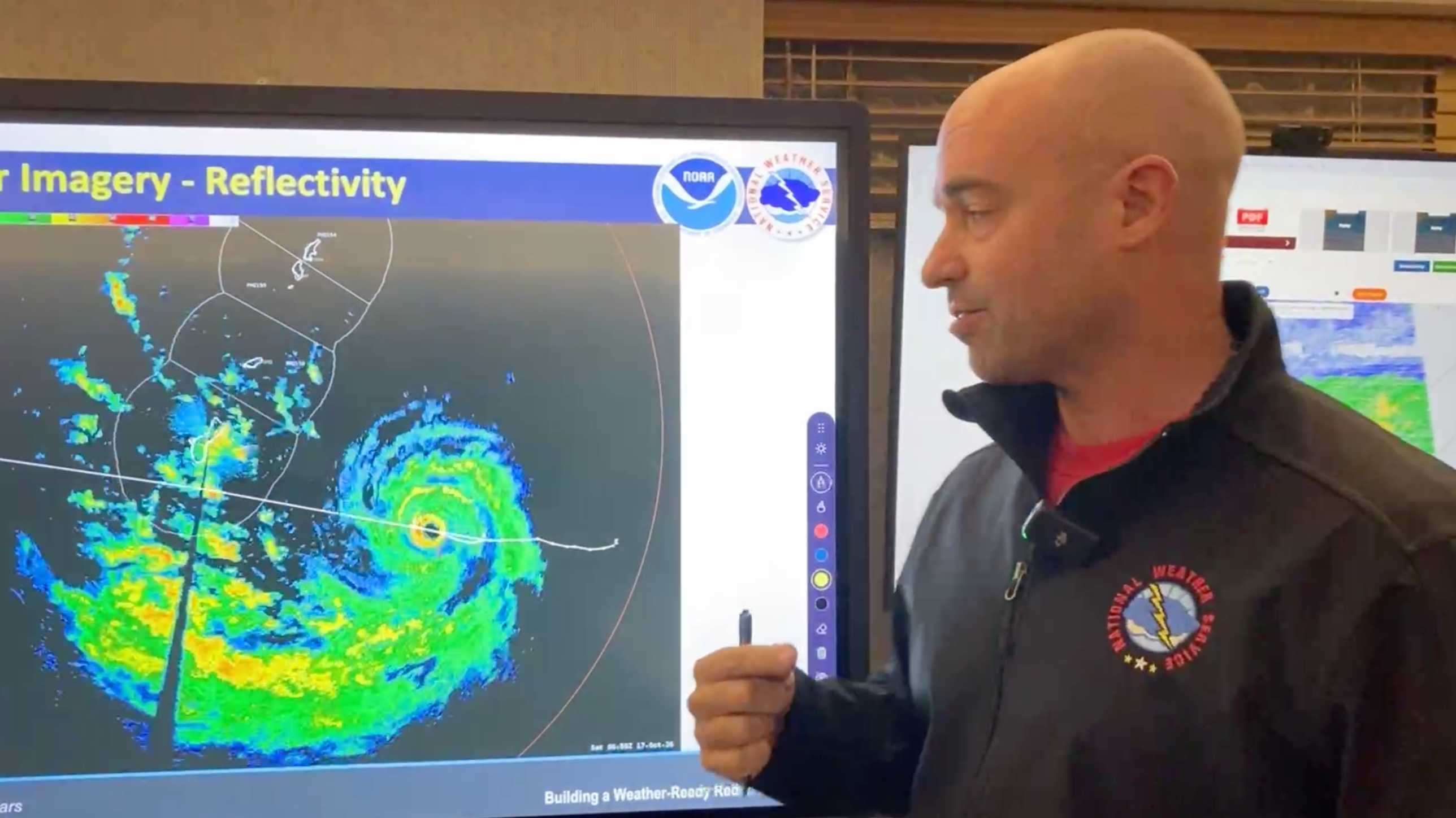
Typhoon Champi is now expected to be a Category 4 storm, with winds of 130 to 156 mph and gusts of more than 180 mph, when it makes its closest approach to Guam.