NASA Guam Remote Station Reopens Post-Typhoon Mawar
BY DANIEL M. PEREZ
Journal Staff
Photo courtesy of NASA
NASA commemorated the full restoration and return to service of its Guam Remote Station on Sept. 10 following more than three years of disaster recovery work triggered by Super Typhoon Mawar in 2023.
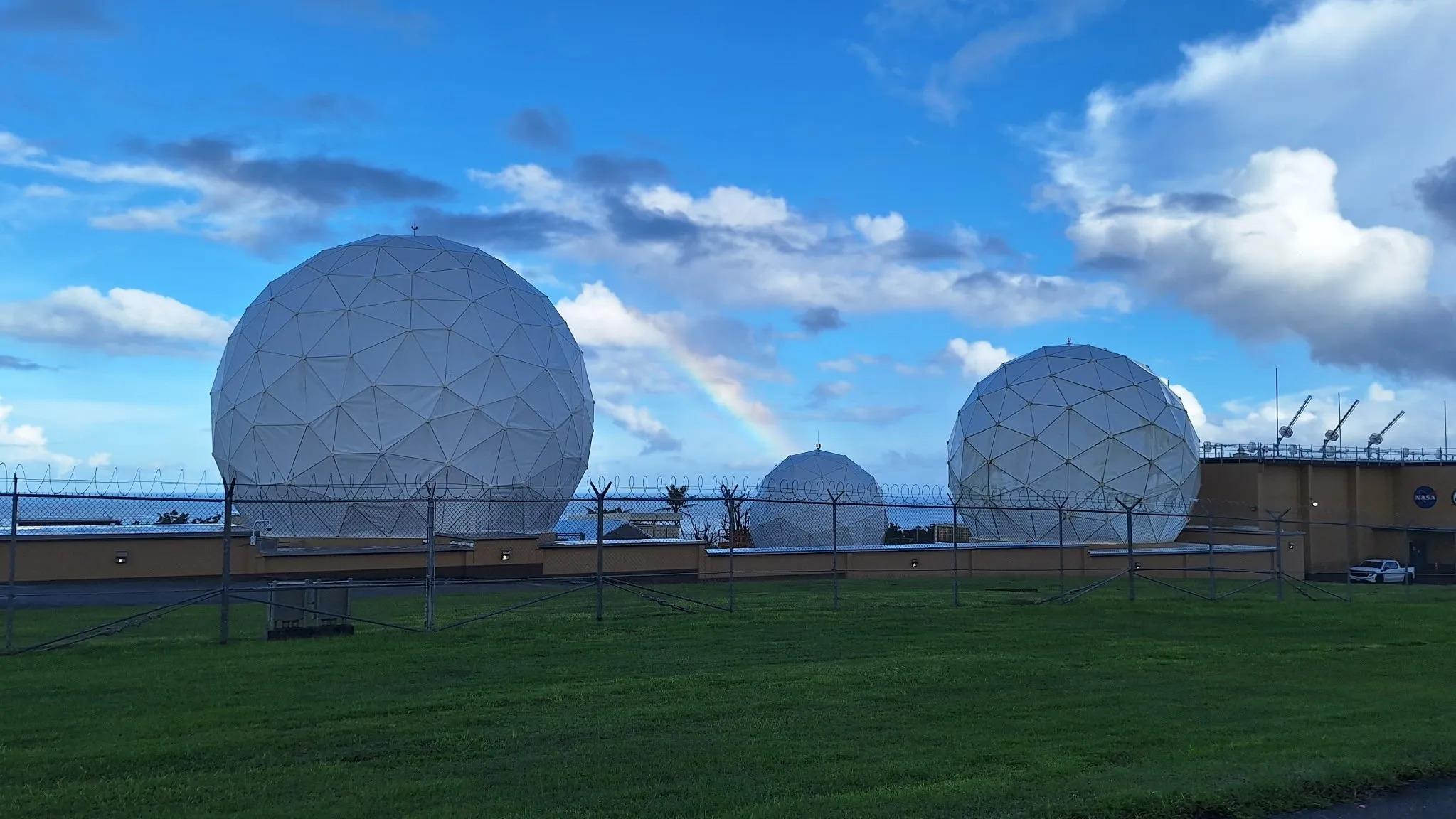
Engineers and technical teams completed the final phase of the rebuild on July 1, returning the station’s central antenna to active service. The facility, located in Dededo, serves as a crucial hub for NASA’s Near Space Network and Tracking and Data Relay Satellite constellation, maintaining continuous communication links with the International Space Station and low-Earth orbit spacecraft.
Super Typhoon Mawar struck Guam on May 24, 2023, with 185 mph winds and over 28 inches of rain. The category four storm demolished two 16.5-meter ground antennas and damaged an 11-meter antenna alongside the site’s Inter Facility Link building.
The damage reopened the "Zone of Exclusion" for the first time since 1998, reducing satellite network coverage to about 85% of a spacecraft’s orbit and risking communication blackouts of up to 20 minutes during each 90-minute orbit. Following initial emergency repairs and the temporary deployment of two mobile units provided by the U.S. Army, Congress appropriated disaster-relief funding in early 2025 to rebuild and harden the facility against future extreme weather events.
Reconstruction began in summer 2025 and concluded in summer 2026, fully restoring seamless orbital communications.
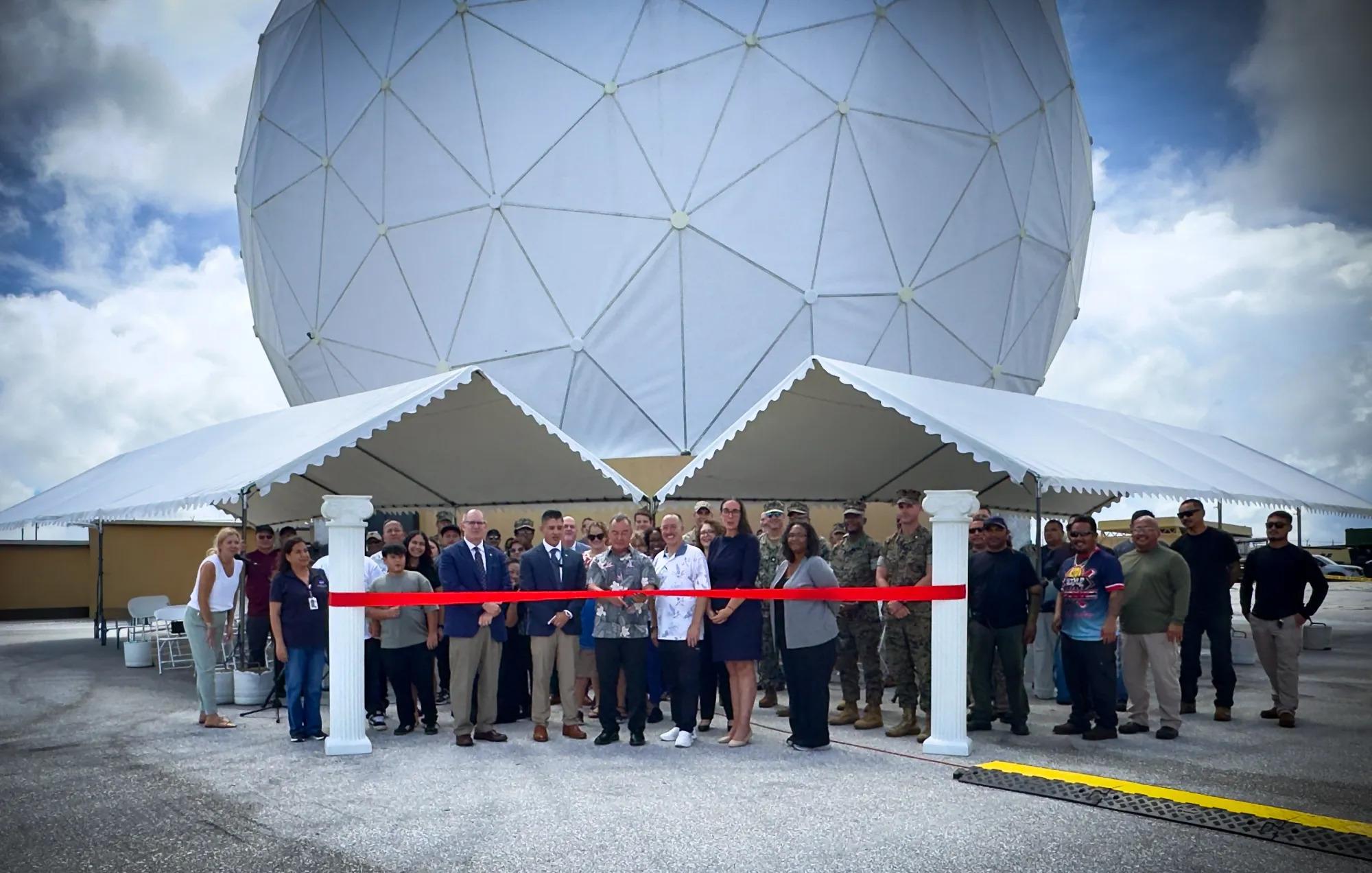
The upgraded facility has since weathered two subsequent super typhoons with minimal impact. At a ribbon-cutting ceremony held in front of the rebuilt central antenna, representatives from NASA's Space Communications and Navigation division joined local staff and government representatives to celebrate the milestone. Local station staff members were commended for their work in debris removal, site security, and operational recovery.
Photo courtesy of NASA
“The return to service of the Guam Remote Station's central antenna represents far more than the restoration of a critical piece of infrastructure, it is a testament to the dedication, resilience, and ingenuity of the people who made it possible,” said Jena Garrahy, deputy program manager for network operations at NASA’s Space Communications and Navigation division.
The Guam Remote Station is funded by NASA’s Space Communications and Navigation division in Washington and operated out of NASA’s Goddard Space Flight Center in Greenbelt, Maryland. Recovery and repair operations were managed through NASA’s Glenn Research Center in Cleveland. mbj
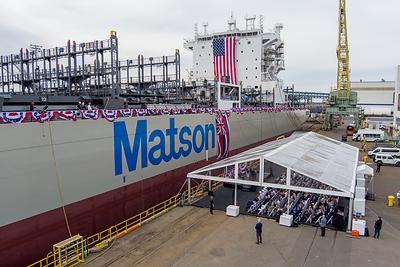
Matson Inc. and Hanwha Philly Shipyard Inc. held a christening ceremony for the Aloha Class Vessel Makua, set to serve Guam in the first quarter of 2027, at the Hanwha Philly Shipyard, Philadelphia on Oct. 12.
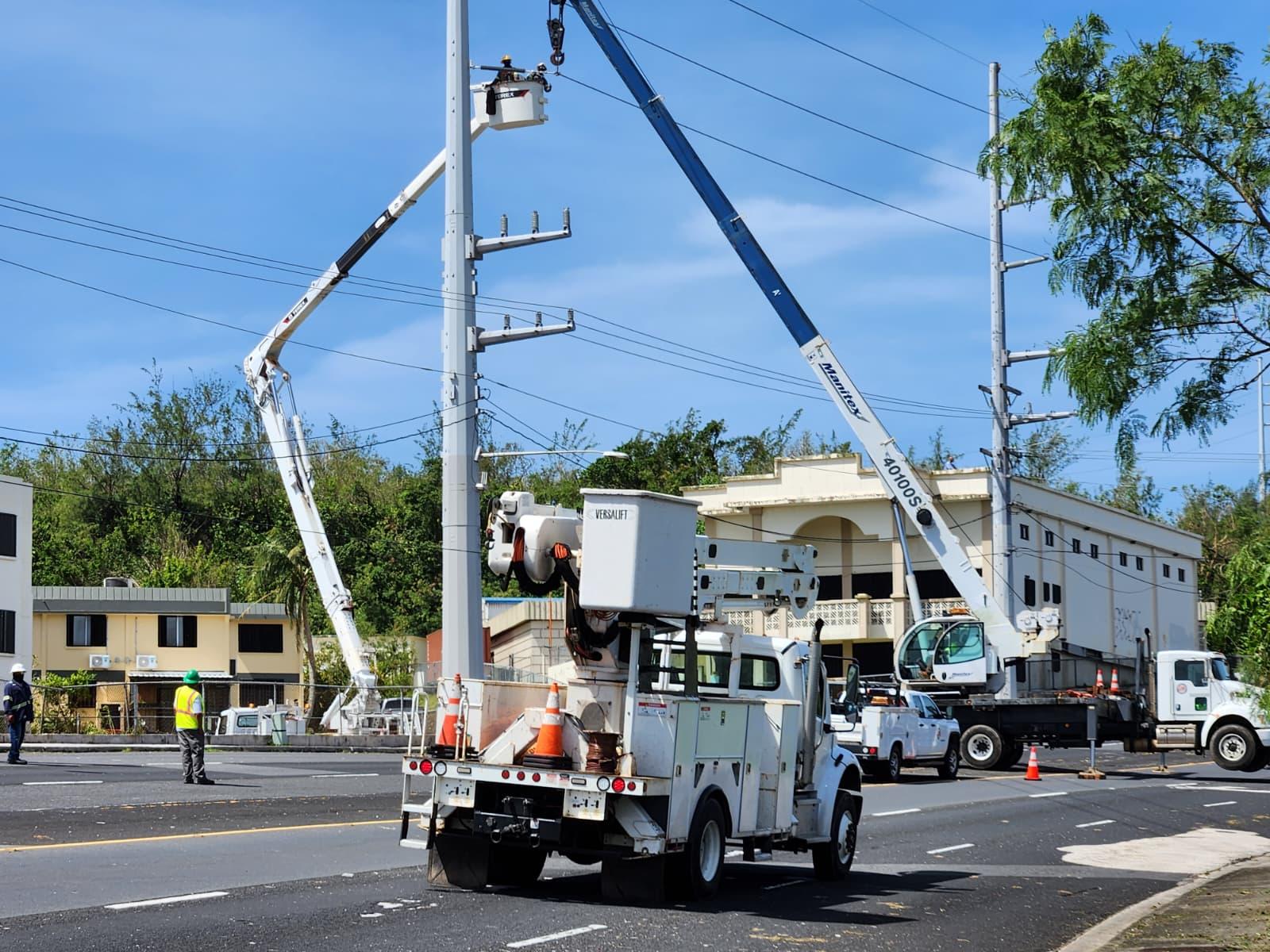
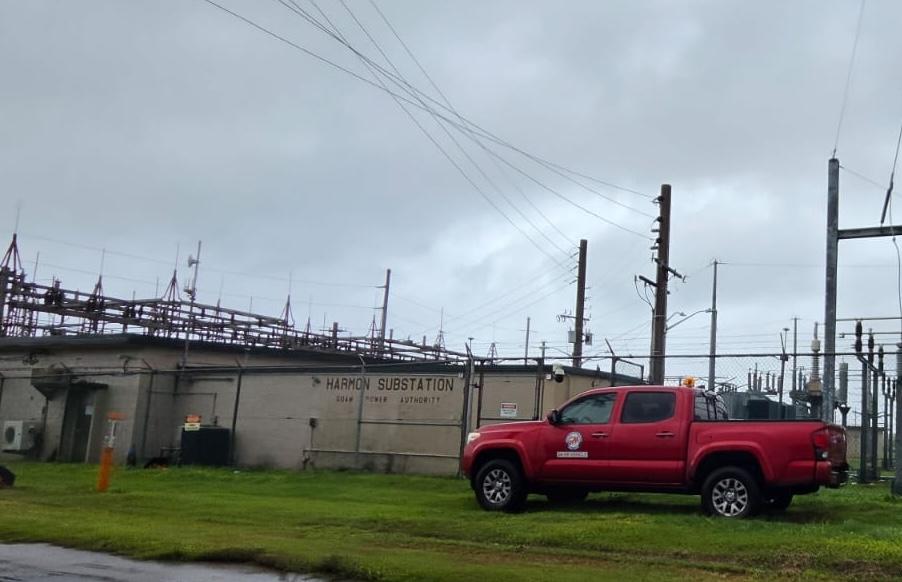
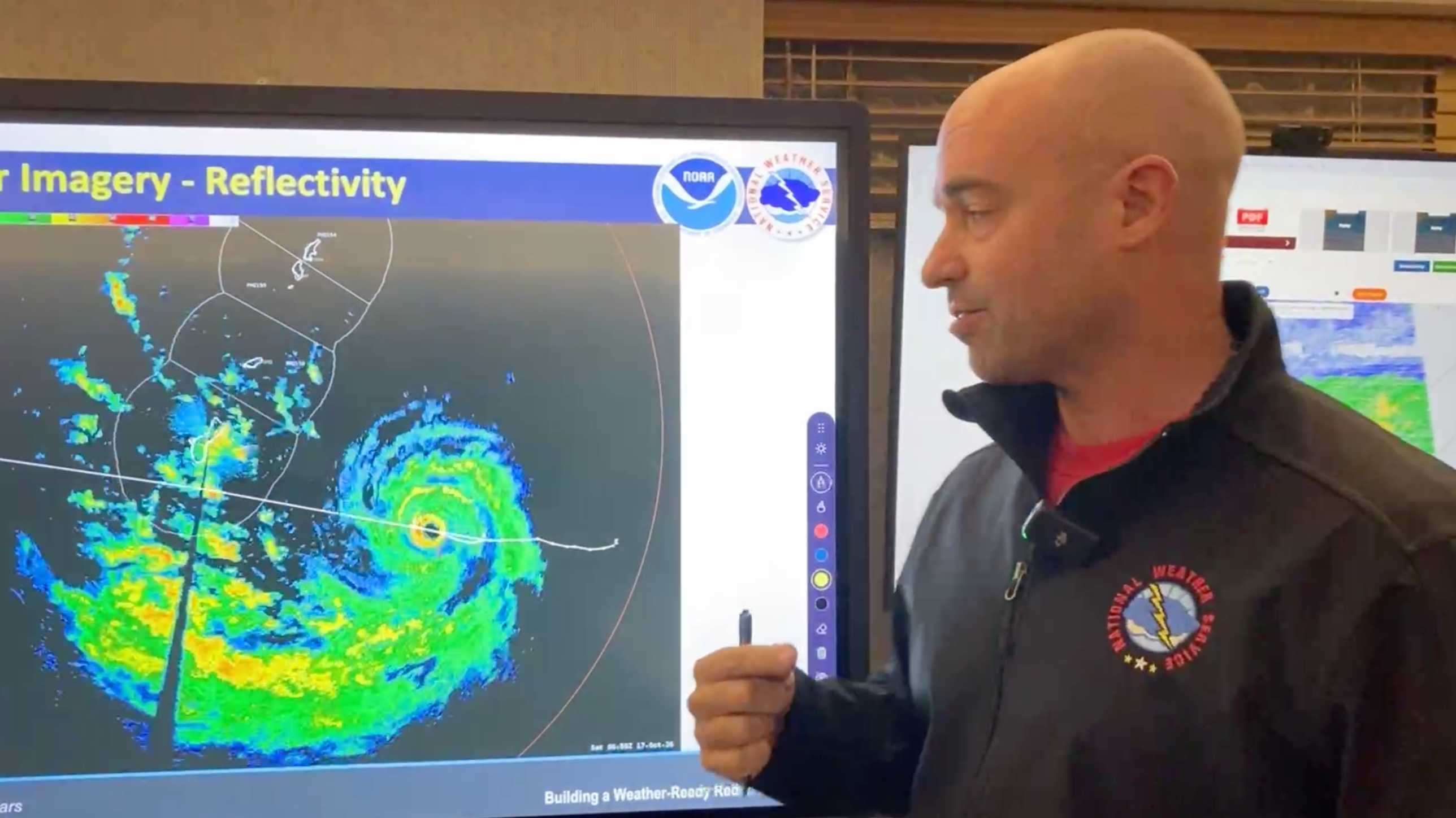
Essential infrastructure, commercial fuel stations, and private health facilities across Guam are swiftly reopening following the passage of Super Typhoon Champi, with key transportation hubs and utility providers moving into full recovery status.
Just hours after Super Typhoon Champi passed south of Guam, President Donald Trump approved Gov. Lourdes A. Leon Guerrero's request for an emergency declaration, which authorizes the Department of Homeland Security's Federal Emergency Management Agency to coordinate emergency assistance.
Typhoon Champi is now expected to be a Category 4 storm, with winds of 130 to 156 mph and gusts of more than 180 mph, when it makes its closest approach to Guam.