REFORPAC 2025: largest contingency-response exercise in the Pacific
BY SKYLER OBISPO
Journal Staff
On July 10, the U.S. Pacific Air Forces kicked off Resolute Force Pacific 2025, an Air Force Department-Level exercise, the largest ever conducted in the Pacific according to the 36th Wing commander, U.S. Air Force Col. Charles D. Cooley.
Cooley also serves as the commander for the air expeditionary task force for REFORPAC 2025, which was stood up specifically for the exercise.
Roughly 12,000 participants from the U.S., Canada, Japan, Great Britain, Australia, New Zealand, and South Korea as well as 400 aircraft are taking part in the exercise which spans more than 50 locations across the Pacific. Cooley said that on Guam, there are 5,000 personnel who are involved in REFORPAC 2025.
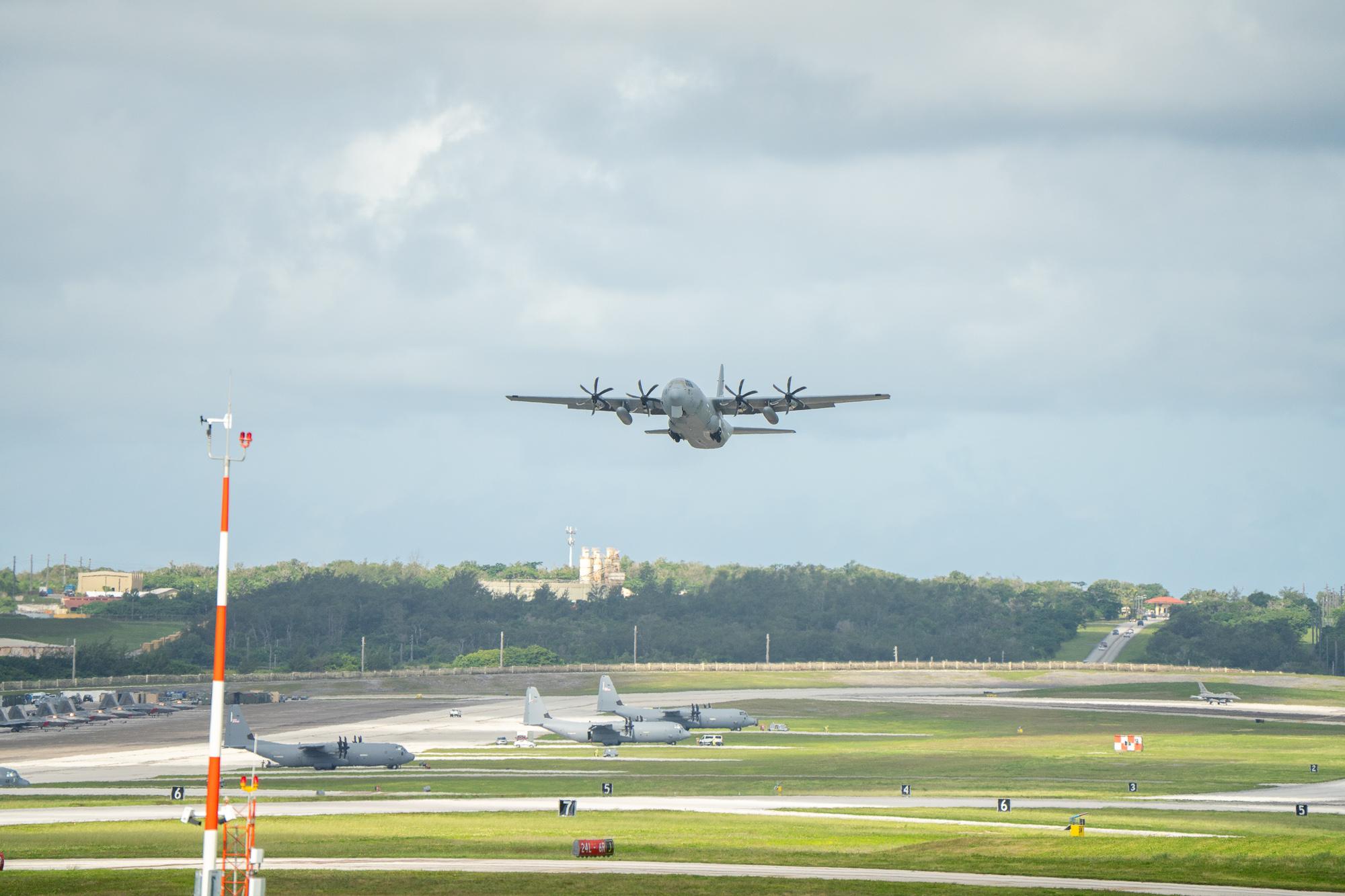
An HC-130J takes off from Andersen Air Force Base Guam. Photo by Skyler Obispo
U.S. Air Force Col. Brandon R. Shroyer, deputy commander of the 36th Wing, told reporters at a media roundtable on July 17, that the international partners primarily brought “mobility aircraft”. Those are generally support or transport aircraft that do not typically see combat. Joining the exercise is the 3rd Wing and the 354th Fighter Wing, both out of Eielson Air Force Base Alaska.
The goals for the exercise are primarily two things: interoperability and readiness.
Cooley said that REFORPAC 2025 gives personnel an opportunity to practice how they would perform if deployed to the region.
“It’s a contingency related scenario where we are testing our ability to move to the Indo-Pacific at scale and mass,” he said. “It’s just a readiness exercise, a chance for us to work on our command and control and our interoperability with the rest of the participants.”
One of the largest challenges regional Air Force leaders have identified is the sheer scale of the Pacific Ocean.
Its size puts extraordinary demands on aircraft including fuel and sustainment.
“It’s really challenging our ability to take off in our fighters, which don’t carry a lot of gas, go get fuel, accomplish our objectives, probably go back and get some more fuel so that we can come back and land,” explained U.S. Air Force Col. Matthew “Scout” R. Johnston, commander of the 354th Fighter Wing. "So we're learning a lot of lessons through that.”
U.S. Air Force Col. Charles “Shell” Schuck, commander of 3rd Wing, added that REFORPAC 2025 also tests the resilience of PACAF’s logistics chain for maintenance, supplies, and personnel in remote and austere locations like Guam and the Northern Mariana Islands.
Maj. Jerome Limoge, director of operations for the 138th Electromagnetic Warfare Squadron out of Peterson Space Force Base in Colorado and his team serves at the Space Force component of REFORPAC 2025, protecting and establishing satellite communications infrastructure for forces in the region.
He told reporters that one of the challenges in any exercise is the climate.
“Every environment offers unique and special challenges,” he said. “Operating in a humid environment with salt air, corrosion, in places like Guam [has] different challenges than, say operating in the Arctic.”
Limoge said the different environments allowed his airmen to adapt and innovate.
One of the strengths of the U.S. Air Force and its partner nations operate the same or similar aircraft across its forces Cooley said.
This means that maintenance crews from different nations can work on each other's aircraft in the event repairs or spare parts are needed. Similarly in the air, the aircraft are able to communicate seamlessly and share information with one another.
U.S. Air Force Col. Matthew R. “Scout” Johnston, commander of the 354th Fighter Wing, said that his forces stationed in Japan are able to routinely train with the Japan Air Self-Defense Forces since they also operate the F-35 fighter aircraft.
“Our jets talk to each other, which means we can data link. We can see what they can see,” he said.
Moreover, REFORPAC 2025 allows forces to utilize new technology.
Limoge said that his team is utilizing “smaller, more agile equipment” which cuts down on logistics strain and maintenance requirements.
The entire exercise will culminate into a report that will be issued to PACAF commander, Gen. Kevin Schneider, in August Cooley said.
“We have numerous inspectors on the ground right now that are watching and observing from the Air Force level in D.C., as well as PACAF, all the way to our own local inspectors,” he said.
REFORPAC 2025 will continue across the Pacific until Aug. 8. mbj
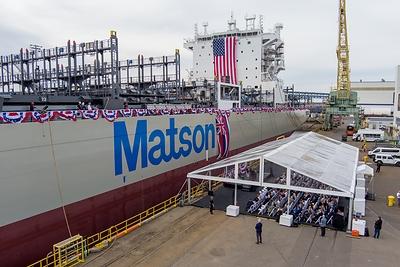
Matson Inc. and Hanwha Philly Shipyard Inc. held a christening ceremony for the Aloha Class Vessel Makua, set to serve Guam in the first quarter of 2027, at the Hanwha Philly Shipyard, Philadelphia on Oct. 12.
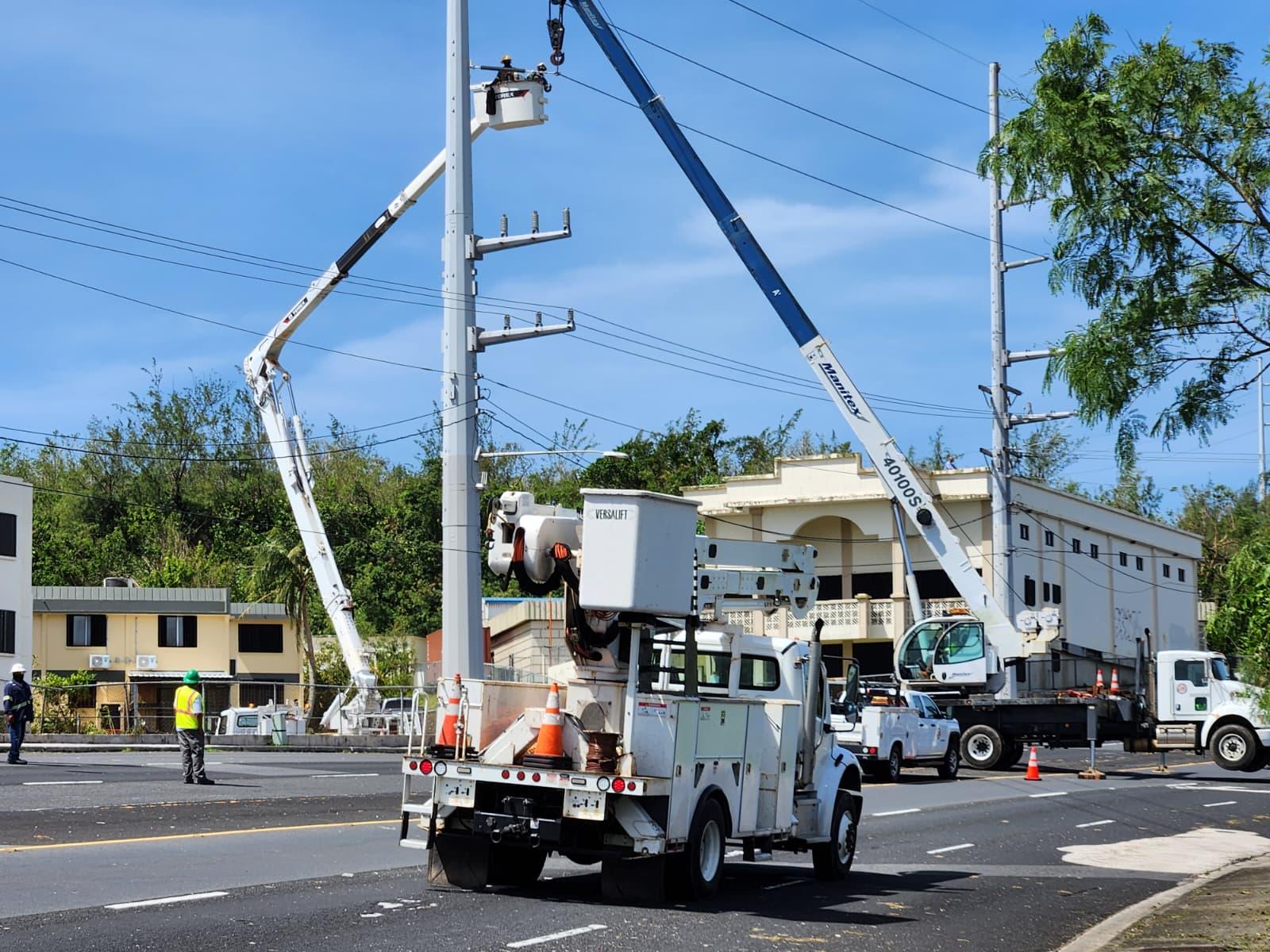
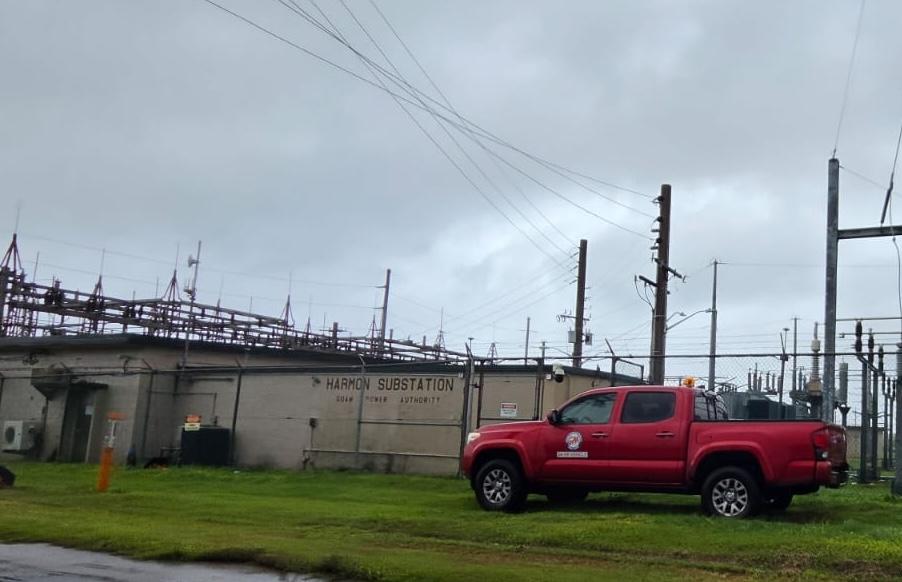
Essential infrastructure, commercial fuel stations, and private health facilities across Guam are swiftly reopening following the passage of Super Typhoon Champi, with key transportation hubs and utility providers moving into full recovery status.
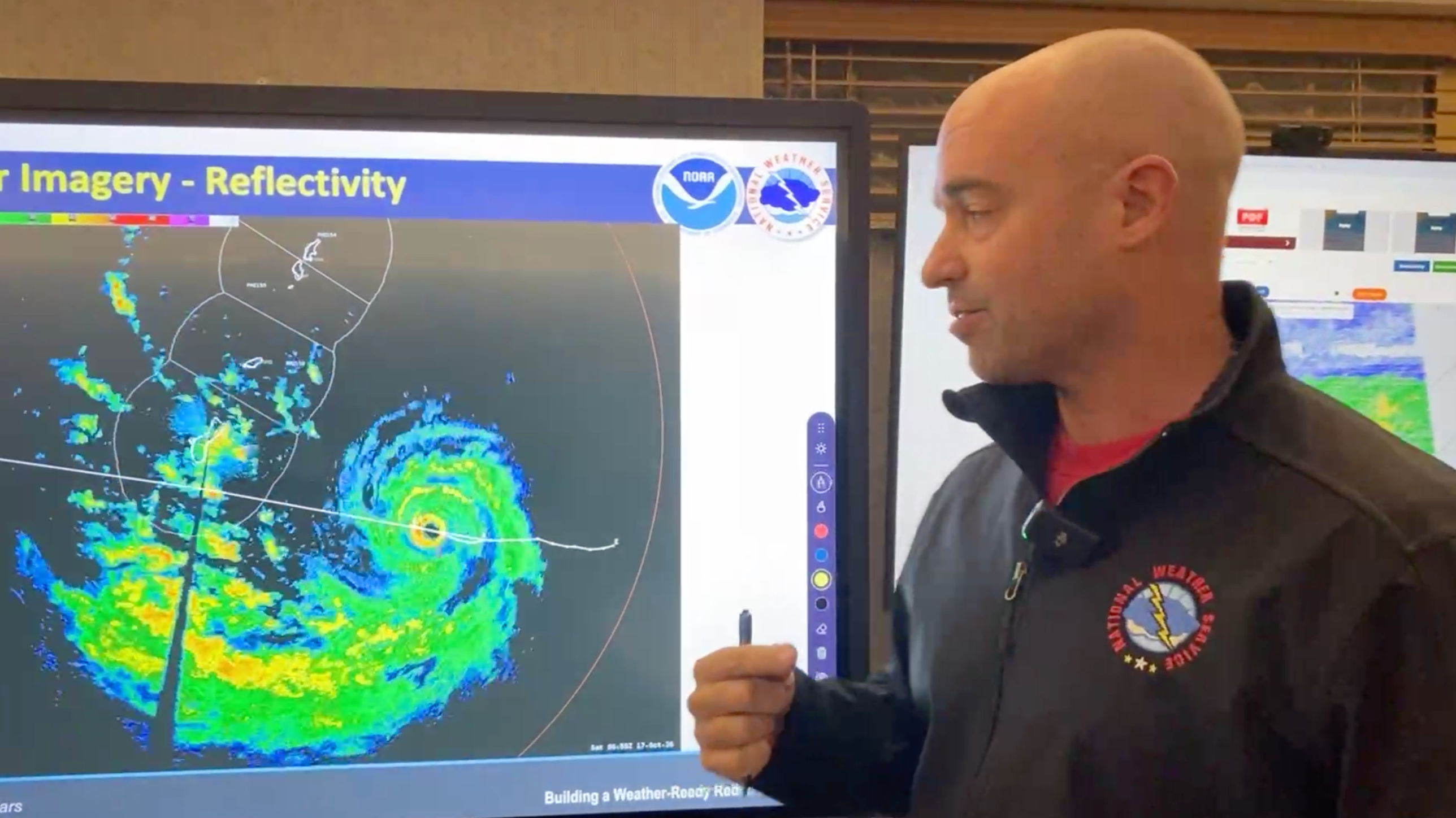
Just hours after Super Typhoon Champi passed south of Guam, President Donald Trump approved Gov. Lourdes A. Leon Guerrero's request for an emergency declaration, which authorizes the Department of Homeland Security's Federal Emergency Management Agency to coordinate emergency assistance.
Typhoon Champi is now expected to be a Category 4 storm, with winds of 130 to 156 mph and gusts of more than 180 mph, when it makes its closest approach to Guam.