U.S. EPA cancels GEO Solar For All award under One Big Beautiful Bill Act
BY SKYLER OBISPO
Journal Staff
In a letter on Aug. 7, the U.S. Environmental Protection Agency told the Guam Energy Office, that the agency’s Solar For All program has been terminated, pursuant to the Trump administration’s One Big Beautiful Bill Act.
The Solar for All program set aside roughly $7 billion to “create new or expand existing low-income solar programs, which will enable 900,000 households … to benefit from distributed solar energy” alongside reducing greenhouse gas emissions and other air pollutants.
Guam was one of 60 grant recipients for the program and was expected to receive $62.4 million.
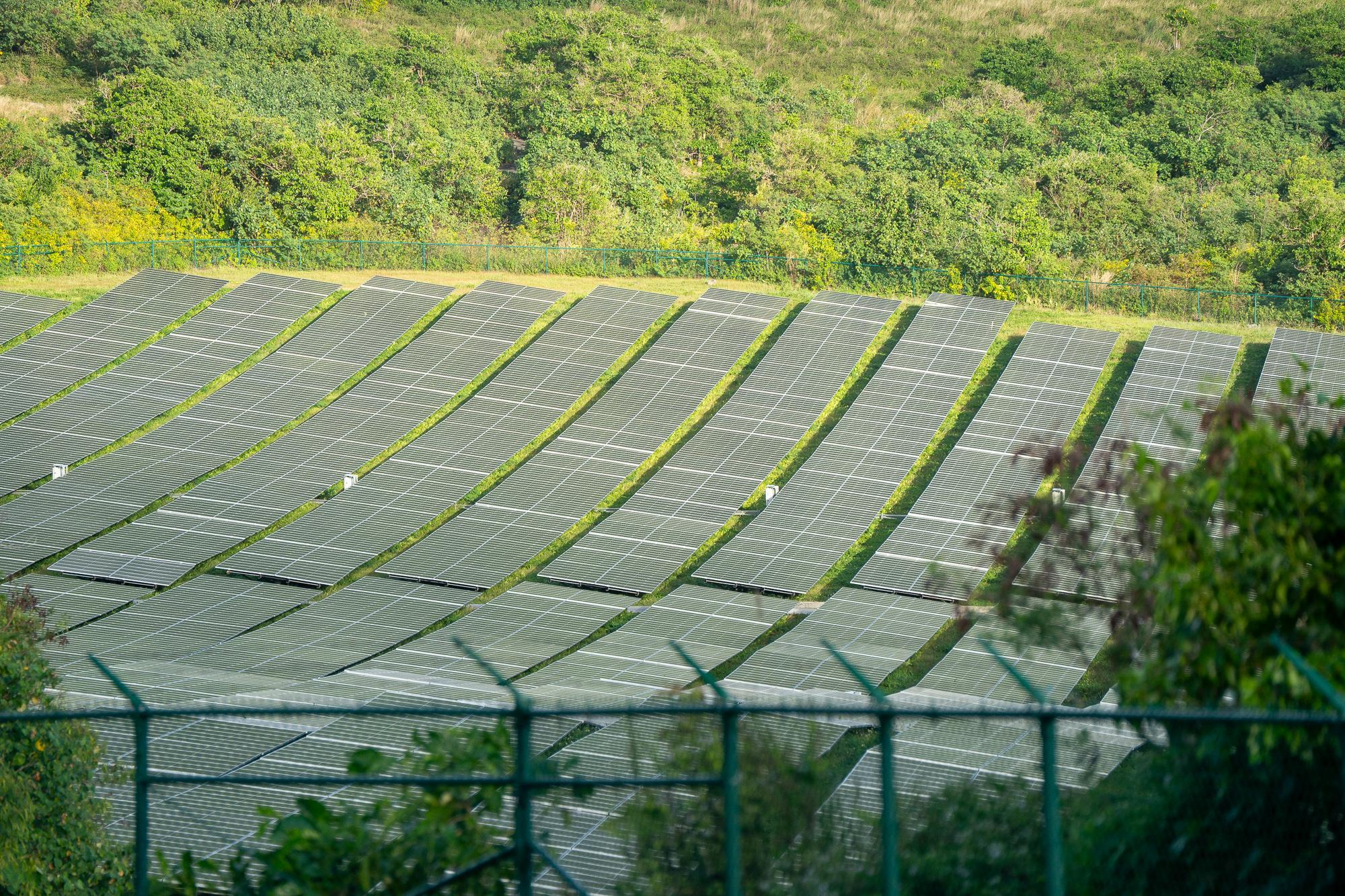
Guam Power Authority's KEPCO Mangilao Solar photovoltaic farm. Photo by Skyler Obispo
EPA said that the agency no longer has a "statutory basis or dedicated funding” to continue to fund the program through changes in the OBBBA.
“Congress has made its intent clear — via a repeal of the statutory authorization and all appropriated funding for the program and the administrative burdens of implementing and overseeing the program — that the [Solar for All] program is no longer to operate,” it said.
John J. Cruz Jr, the Guam Power Authority’s assistant general manager of engineering and technical services, brought up the termination letter at a town hall hosted by Guam’s congressional delegate, James C. Moylan.
Cruz asked if discussions can be had on reclaiming those funds for Guam. Of the $62.4 million allocated from the program, he said that roughly $43 million was going to be allocated to GPA to install eight, 1MW solar photovoltaic panels on school rooftops.
“That would amount to about roughly $2 million a year savings that would be allocated between low-income customers and schools,” he said. “A school bill … has been anywhere up to $15 million, so that’s a substantial savings; even $1 million is substantial savings in terms of the energy bill.”
Cruz added that the termination of the program affects about $2.5 million in other grants received in partnership with the Pacific Northwest National Laboratories and the National Renewable Energy Laboratories.
Guam’s move towards renewable energy is not solely based on climate change, he said. It is about making energy costs more manageable for rate payers and lessening the island’s dependency on foreign oil.
“It would be nice to participate in the energy abundance that the Trump policies are going to bring, but we don’t have pipelines [like] the states, either gas or oil pipelines,” he said.
Guam gets its fuel from the Western Pacific Basin market, he said and that through energy development on Guam, that helps keep money circulating within the island’s economy.
Similarly, GPA told the Journal that the utility is drafting letters and presentations for Moylan on the issue. mbj
Regional leaders, government officials, and industry executives gathered at the Guam International Airport Authority on Wednesday, July 22 for the inaugural session of the Guam-CNMI Visa Waiver Working Group, driving a unified regional effort to expand the Guam-CNMI Visa Waiver Program to include the Philippines.
The commercial adult-use cannabis industry on Guam has officially launched following the issuance of the island's first recreational cannabis cultivation license to local grower Stephen Roberto, operator for Deep Green Guam of Guam Real Deal, LLC.
The Guam Economic Development Authority awarded $316,857.94 in grant funding to 17 local community organizations and public agencies during a check presentation ceremony at Adelup on Wednesday, July 15.