












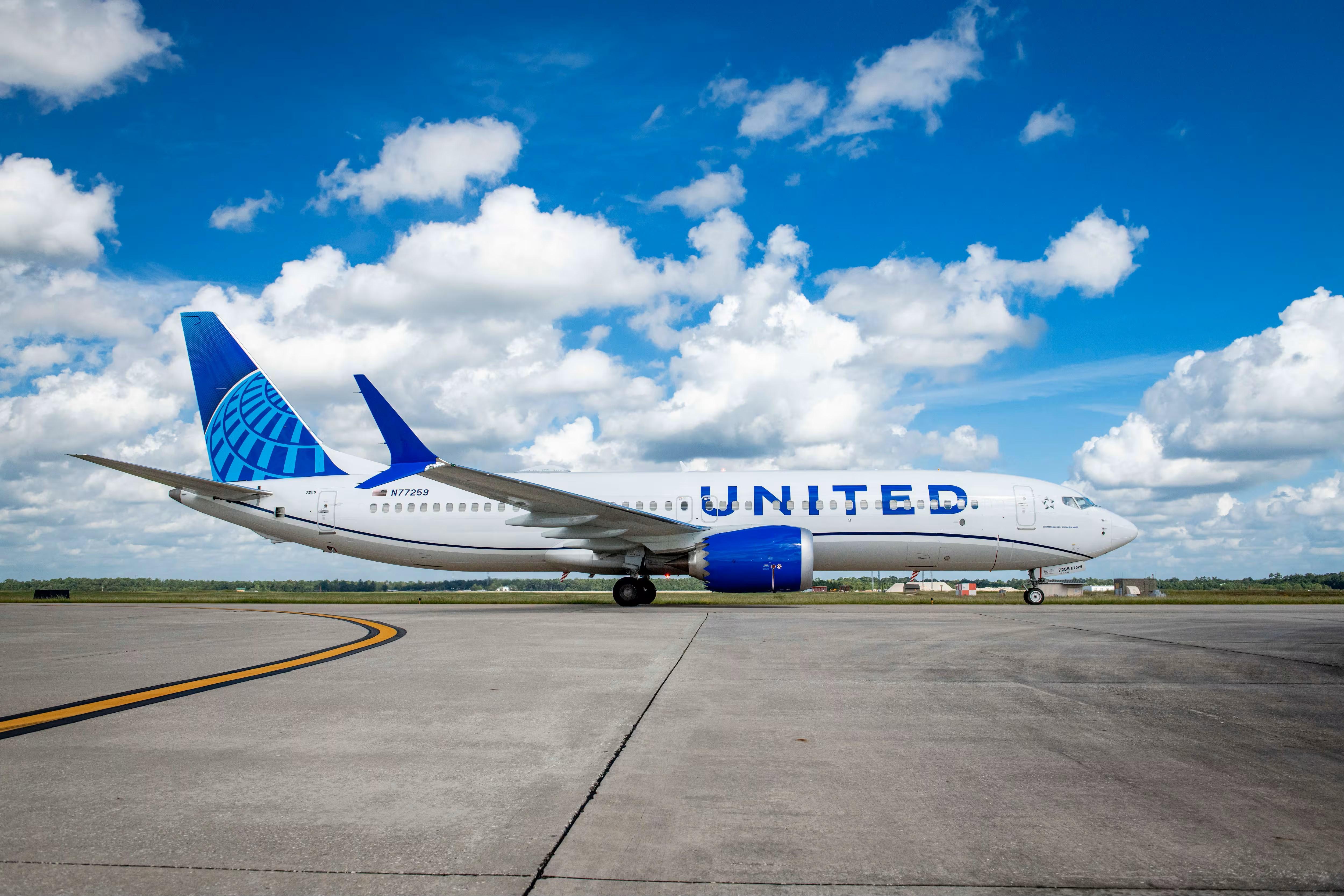
The United Airlines Island Hopper service for the Federated States of Micronesia, the Marshall Islands, plus Palau and Saipan will now be transitioned from the Boeing 737-800 to an all-MAX 8 operation by early October 2026 at the latest, instead of December, according to its route planning.
The Guam-Saipan route will see the new plane from July 19, and the Guam-Koror-Manila twice weekly flight will likewise see the introduction of the MAX 8 Oct. 2.
From Guam to Manila, Nagoya, Osaka, Taipei and Tokyo Haneda flights will see the MAX 8 introduced in December.
In other transportation news:
• Gov. Lourdes A. Leon Guerrero and Gov. David M. Atapang wrote a joint letter on May 21 to the secretaries of the departments of Homeland Security and the Interior, making the case that a Visa Waiver Program for the Philippines allowing travel exclusively to Guam and the Northern Mariana Islands would be consistent with federal policy encouraging a controlled process for cross-border travel in the region that both upholds federal immigration law and supports regional needs, according to a June 5 release.
Wait time for tourist visas from the U.S. Embassy in Manila stretch to between 40 to 100 days, according to media reports.
• The International Air Transport Association released its latest financial outlook for the global airline industry June 7, showing a halving of profitability as a result of war-related Middle East disruptions and high fuel prices. The regional landscape, however, is highly differentiated. At the geographic center of the Middle East war, airlines in the Middle East are expected to collectively fall into the red with weak demand and operational disruptions. All other regions are expected to deliver profits, but at reduced levels from previous projections. Highlights include:
Airlines are expected to achieve a combined total net profit of $23.0 billion in 2026, which is roughly half the previously projected $41 billion. It is also roughly half the $45 billion net profit estimate for 2025. The net profit margin is expected to be 2.0% in 2026, roughly half the previously projected 3.9%. It is also less than half the 4.2% estimate for the 2025 net profit margin. Net profit per passenger transported is expected to be $4.50, half the $9.10 achieved in 2025.
The Asia Pacific region relies heavily on crude oil imports from the Gulf and the lack of such supplies can cause more acute pressure on refineries and create jet fuel shortages as well as higher jet fuel prices than in other regions. This environment is already prompting capacity adjustments, and longer routings, caused by airspace restrictions, lead to increased fuel burn, tighter effective capacity, and higher unit costs, IATA said. mbj