Catching up: PNCC $35 million fiber mobile overhaul
BY OYAOL NGIRAIRIKL
Journal Staff
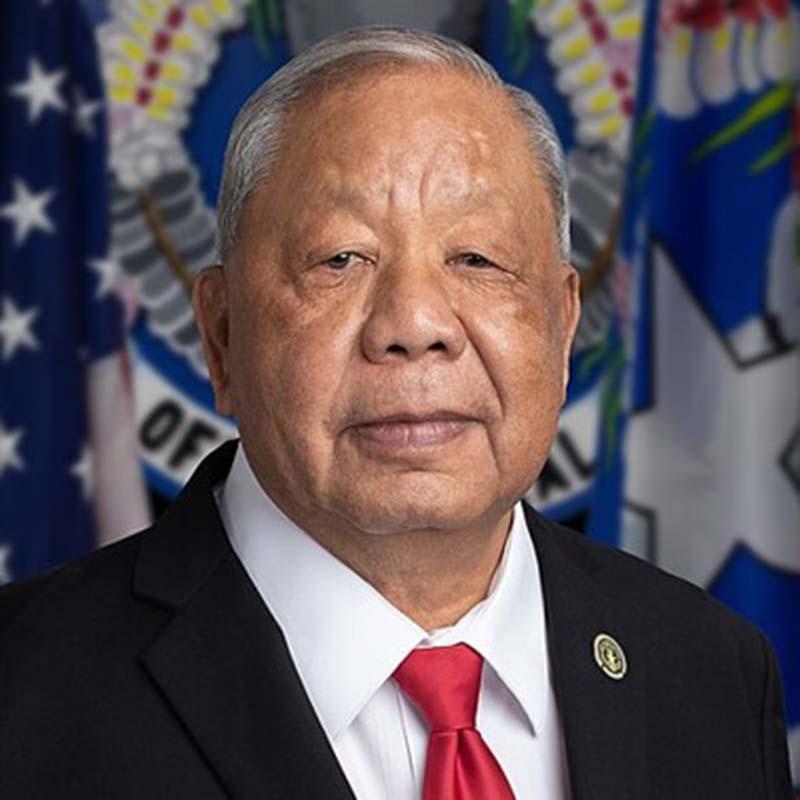
FraserKOROR, Palau — The Palau National Communications Corp. is in the middle of the largest telecommunications buildout in the country's history, replacing its aging mobile network and laying fiber directly to homes and businesses, as island utilities across the region push to modernize networks that have long lagged behind the U.S. mainland.
Simon Fraser, CEO of PNCC, said the company is simultaneously executing two major infrastructure projects: a nationwide replacement of its mobile network and a $34.9 million fiber-to-the-premises rollout funded through the U.S. Department of Agriculture's ReConnect program.
On the mobile side, PNCC is replacing its existing infrastructure with a new Nokia 4G and 5G Standalone network, a project Fraser called one of the most significant digital infrastructure investments currently underway in the Pacific. Procurement and vendor selection are complete, and the project has moved into deployment. About $2 million worth of Dell server and storage infrastructure has been delivered and installed across PNCC's data centers, and major design work has wrapped up with Nokia, LotusFlare and Openmind, Fraser said.
The new network will boost the number of mobile sites in Palau from 59 to more than 150, improving capacity, coverage and resiliency across all 16 states, according to Fraser. Commercial launch is targeted for May 2027.
The fiber project, for which PNCC has taken on the role of prime contractor, is also moving forward. Materials for the network's self-build portions have already arrived in Palau, and construction is set to begin in July, Fraser said. The new fiber will replace legacy copper infrastructure with high-speed broadband delivered directly to homes and businesses.
"Together, these projects will provide the digital foundation for Palau's future, supporting economic development, government digital transformation, education, healthcare, tourism and emerging technologies for decades to come," Fraser said.
The investment mirrors a broader scramble across the U.S. Pacific territories and freely associated states to replace decades-old networks with federally backed fiber and next-generation wireless.
ApatangIn the Northern Mariana Islands, Gov. David M. Apatang's administration and IT&E signed a $31.3 million Broadband Equity, Access and Deployment, or BEAD, subgrant agreement in May to build a fully underground, climate-hardened fiber network reaching nearly 10,000 homes, businesses and community institutions across Saipan, Rota and Tinian. IT&E is matching that award with nearly $22 million in private capital — about 41% of the total project cost, well above the federal minimum.
NMI officials have said the decision to bury the network, rather than rebuild it on poles, was driven by the territory's recurring losses of telecommunications service during typhoons.
Glen Hunter, special assistant for the CNMI's Broadband Policy and Development Office, said in a social media announcement that the agreement followed Super Typhoon Sinlaku and previous storms that knocked out service across the islands.
"We refused to rebuild the same fragile systems," he said, describing the project as 100% underground and climate-hardened across Saipan, Tinian and Rota. "This is not just infrastructure — it's recovery, preparedness, and opportunity."
Hunter said the project will deliver broadband to every home, business and community anchor institution in the commonwealth, and that nearly 300 NMI residents have already been trained through the Governor's Broadband Boot Camp to support the buildout. He credited IT&E's willingness to put up more than 40% of the project's cost as central to the resiliency focus of the plan, and said construction and newly connected sites will roll out over the next four years.
"Our islands are rebuilding smarter and stronger," Hunter said.
Hefflin Bai, Arianne Benhart, Valena Joseph, Pamela Anastacio and Christie Sisang of Palau National Communication Corp., regularly work with Palau Community College students to promote local capacity in the telecom industry. Photo courtesy PNCC
Guam, meanwhile, has been working through its own $156 million BEAD allocation as the territory and local providers hash out how the federally funded buildout will mesh with networks operators have already built with hundreds of millions of dollars of private investment. The Journal has reported extensively on both efforts, including discussions between GovGuam and telecom executives over whether subsidies should flow to providers or consumers, and on the broader $42.5 billion national BEAD program that is reshaping how residents across Guam and the NMI will purchase broadband and mobile service in the years ahead.
HunterIn the meantime, competition is high among telecom providers to secure clients as they switch consumers to fiber optic cable.
PNCC launched eSIM service Feb. 24 in partnership with Giesecke+Devrient, a global SIM technology and digital security provider. Fraser said the company has activated more than 1,000 eSIMs since launch, with adoption strongest among tourists, business travelers and customers using newer smartphones increasingly built around the technology.
"For local customers, eSIM provides additional flexibility and convenience, particularly for those who wish to maintain multiple services on a single device. For visitors to Palau, eSIM provides a significantly more convenient experience," Fraser said, adding that PNCC expects adoption to keep climbing as eSIM becomes the global standard and more devices move away from physical SIM cards.
Fraser briefed Palau's Senate, the Olbiil Era Kelulau, a few weeks ago on PNCC's financial performance, infrastructure programs, cybersecurity initiatives and long-term strategy.
Revenue increased in fiscal 2025 while operating expenditure declined, producing EBITDA growth of 17% year-over-year, Fraser told senators. PNCC's EBITDA margin has improved from about 15% in fiscal 2023 to 28% today, he said, approaching the 30% benchmark often associated with financially sustainable telecom operators internationally. The company achieved that without imposing inflation-based price increases on customers despite global cost pressures across the sector, according to Fraser.
Fraser also updated senators on the Mobile Network Modernization Project and the fiber rollout, and discussed PNCC's strategy to position Palau as a regional digital infrastructure hub. The new mobile network is being designed to eventually support other Pacific Island nations through hosted telecommunications platforms, cybersecurity services, emergency communications, messaging infrastructure and other network-as-a-service offerings, Fraser said.
Cybersecurity also featured in the briefing. Through PNCC's participation in GSMA and regional cybersecurity initiatives, the company has begun working directly with Google on cybersecurity awareness and scam prevention in Palau. PNCC and Google recently held the country's first joint cybersecurity and scam protection awareness session, with more sessions planned for government agencies, businesses, youth and senior citizens, Fraser said.
PNCC is also preparing its network for the Pacific Islands Forum, which is expected to draw more than 2,000 people to Palau. Fraser said preparations include network optimization, additional capacity planning, resilience testing, enhanced monitoring and contingency planning across venues expected to host Forum activities.
"The Forum also provides an opportunity to demonstrate the significant investments being made into Palau's telecommunications infrastructure," Fraser said, calling it a chance to showcase Palau's growing role as a regional leader in digital connectivity, cybersecurity and resilient communications infrastructure.
Fraser said he wants people to understand that PNCC is not simply a telecom or technology company.
"PNCC is Palau's company because every person in Palau is both a stakeholder and a customer," he said. "The infrastructure we build, the services we provide, and the decisions we make have a direct impact on Palau's digital future, and that is a responsibility we take very seriously."
Fraser directed part of his message to Palauans living overseas, in Guam, Saipan, Hawaii, the U.S. mainland and elsewhere, saying the country needs talented people to help build its digital future as PNCC expands its capabilities in engineering, cybersecurity, information technology, customer experience, digital services, project management and innovation.
"There has never been a more exciting time to be involved in shaping Palau's digital future," Fraser said. "The future of Palau will be built by its people, and PNCC is proud to play a role in creating the digital foundation that will help make that future possible." mbj
Since 2023, residents of and travelers to Palau have had to learn how to do without a nicotine fix via e-cigarettes. The legal importation of e-cigarettes, or vapes, is now banned, and customs officers at the airport have been confiscating these products for about three years.
President Surangel S. Whipps Jr. escorted Vice President Hsiao Bi-khim of Taiwan to the Rock Islands, where she kayaked and swam on her first visit to Palau.
In Koror alone, there are about a dozen laundromats — a few within a five-minute walk of each other — driven by the country's tourism boom, an expanding hospitality sector, and a pandemic-era pivot toward residential customers.
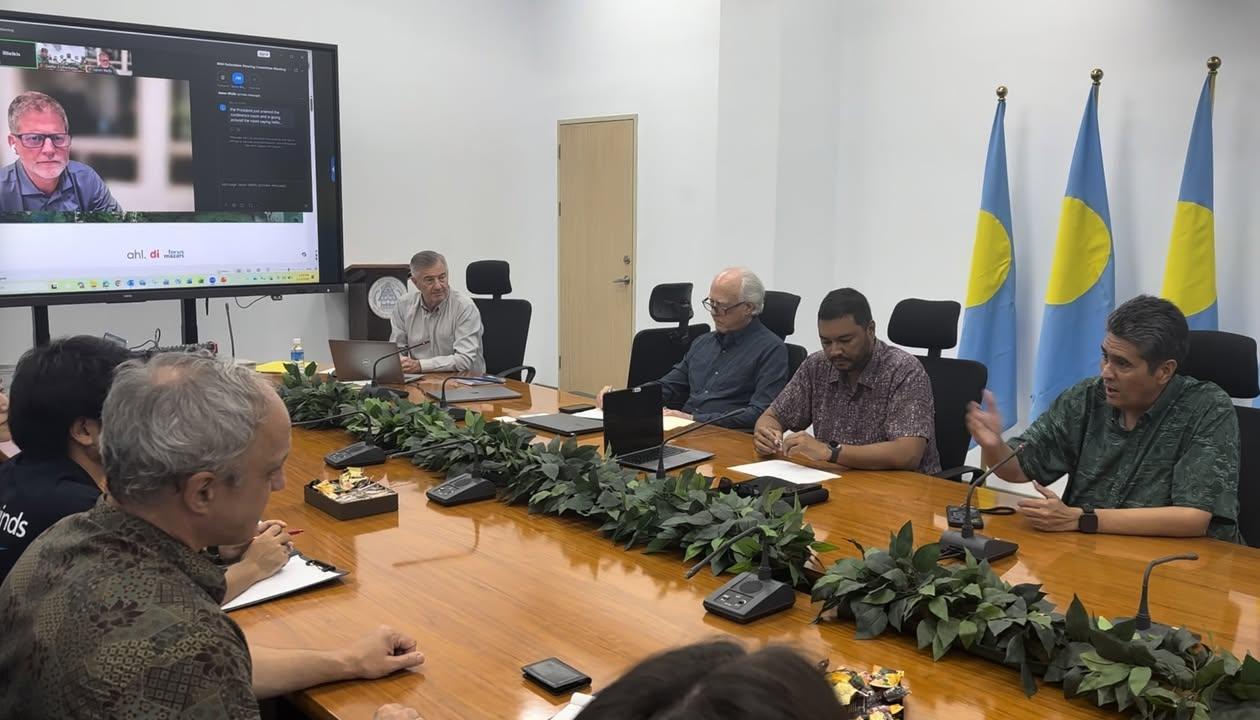
KOROR, Palau — More than three decades after it was built, Palau’s only hospital is firmly on a path toward replacement. President Surangel S. Whipps Jr. convened the first meeting of the Belau National Hospital Relocation Steering Committee on May 14, marking the start of what officials are calling the implementation phase of a project that many say is long overdue.