Tourism authorities deal with realities; focus on island attractions and year-end opportunities at Tokyo Expo
BY JULIAN RYALL
Japan Correspondent
Photo by Julian Ryall
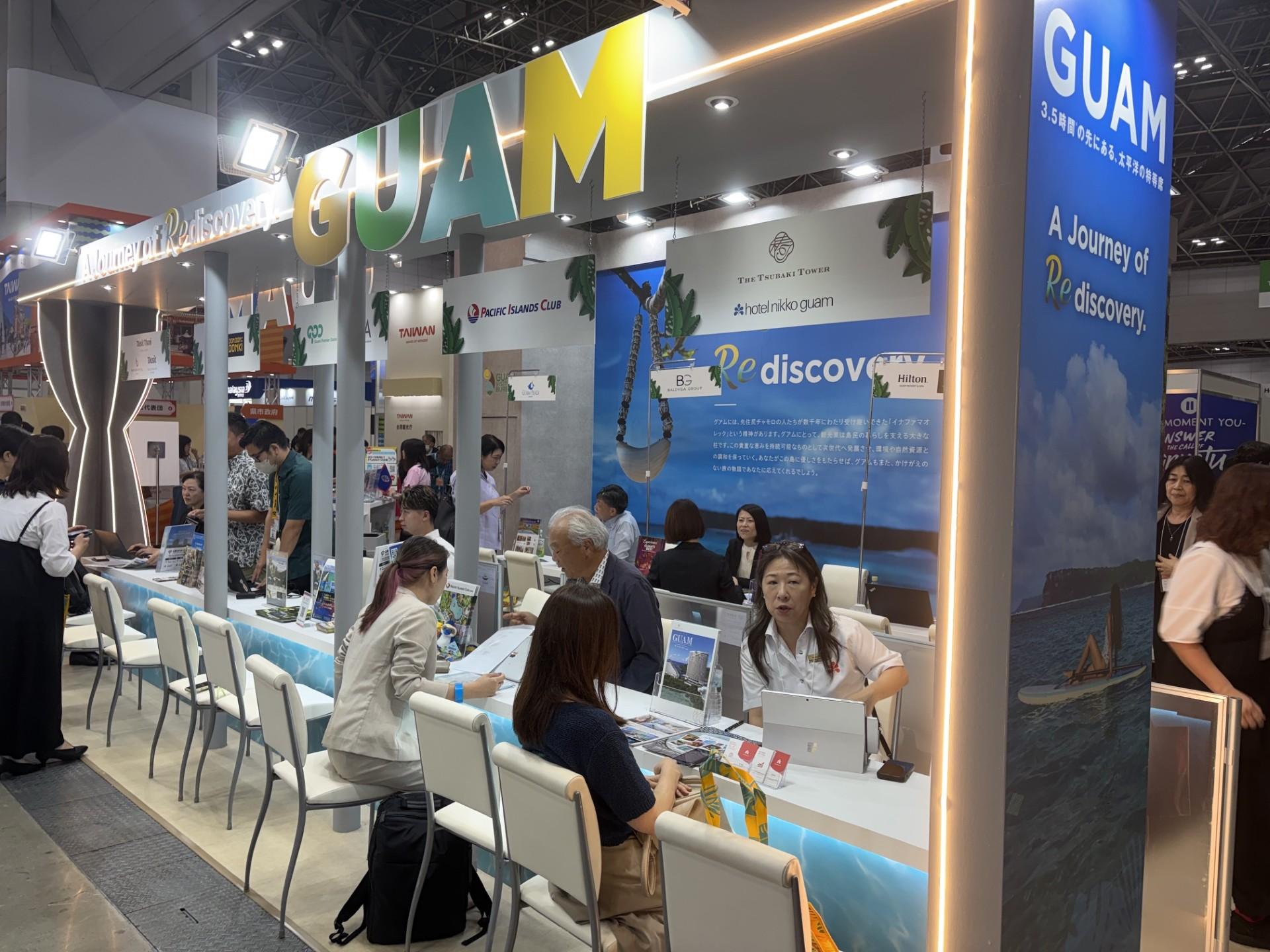
TOKYO, Japan — Guam’s travel authorities were keen to play up the importance and potential of the Japanese market during the recent Tourism Expo Japan, but there was clearly concern among many of the companies taking part in the event at the Tokyo Big Sight convention center.
Preliminary figures from the Guam Visitors Bureau show that arrivals from Japan were down 29.5% in July from the same period one year earlier, with total arrivals down 37.8%. June figures for the Japan market were slightly better but still in negative territory, down 12.2% from a year earlier, while the totals were down 9.6% in May.
Bureau officials and exhibitors worked hard over the four-day event from Sept. 24 to highlight the appeal of Guam, but there was a recognition that several challenges that are beyond the control of the travel sector have aligned to make attracting more visitors difficult.
Top of the list has to be the weakness of the yen against the dollar, with the Japanese currency slumping more than 7% in the last 12 months and a shocking 51% in the last decade. At the same time, Japan is experiencing significant inflation for the first time in a generation, with the price of household necessities rising, while wages remain stagnant.
Inevitably, luxuries like travel have been the first to be cancelled for many Japanese, with total outbound travel in July down 1.2% from the same month one year earlier. Outbound travel is also only at 65% of the 2019 figure, the year immediately before the global pandemic.
Photo by Julian Ryall
The cost of getting to Guam has also risen since the U.S. attack on Iran sent fuel prices spiraling higher, while Japanese arrivals to all U.S. destinations was down 7% year on year in July. Widely seen as cautious travelers, some Japanese are opting not to travel to U.S. destinations after recent media coverage of ethnic minorities being mistreated.
Japanese travelers also have more options in non-dollar destinations in the region, such as South Korea, Taiwan, the Philippines and Vietnam, while there was extensive coverage in the Japanese media of the impact of super typhoon Sinlaku in April and the Bavi storm in July.
“There have been challenges this year,” admitted Régine Biscoe Lee, president and CEO of GVB. “We were doing great between October last year and into February this year, but then jet fuel prices went up in March and we saw a decline in numbers.” The fuel shock was dramatic, GVB officials said, with the surcharge to passengers leaping from $27 per person to over $300. For some low-cost carriers, that effectively doubled the price of a ticket and hit sales hard.
“Then we had the first typhoon in April and we had to stop flights for several days, which really hurt us,” Lee told the Journal in an interview at the expo. The bureau has been proactive in its response, promoting the Go Go Guam initiative for discounts at businesses across the island and the second season of the last year’s ground-breaking docu-drama “Why I’m With You” due to be aired on TV Tokyo in the coming months.
The first series followed the experiences of three couples living on Guam, highlighting the island’s culture, natural beauty and cuisine, attracting around 1.5 million viewers to each episode. Lee said the second series was commissioned based on the “very positive response” to the initial show and it is hoped it will drive interest in Guam. A third initiative was a large-scale familiarization tour in early September for 240 travel agents, influencers and journalists from overseas, with 120 of the group from Japan and others from the key markets of South Korea, Taiwan, Malaysia and the Philippines.
Photo by Julian Ryall
The bureau is continuing to communicate the short travel times from Japan to Guam as a key element of its outreach, as well as it outdoors attractions and natural environment, and to promote the idea that Guam is not a “cheap” destination but one a choice.
Koji Nagano, director of sales for Pacific Islands Club Guam, said Japanese consumer behavior has changed since the pandemic.
“Travelers are becoming more individual and we are seeing a decrease in sales of package tours sold through travel agents,” he said. At PIC, that translates to a room occupancy rate hovering around 60% at present, down from 90% before the pandemic.
Slightly less than 60% of PIC guests today are from South Korea, with Japanese accounting for the next largest number of guests, followed by a smaller number of Taiwanese and local Guam residents. “The weak yen has also played a big part,” Nagano said, adding that the cost of a four-day package tour is well over double what it was in the past. “And for a family of four, that’s a lot of money,” he said.
PIC is launching a new campaign to attract international travelers in the early part of next year, highlighting all the reasons to stay at a property that has reinvented itself as a theme park resort.
“We are promoting all the reasons to choose PIC, including that we are all-inclusive and the other things that other resorts cannot do,” he said, adding that he is optimistic that bookings will improve around the year-end holiday season and over Chinese New Year.
Kaoru Ohira, senior sales manager for Dusit Hotels & Resorts based in Tokyo, is also hopeful about the upcoming holiday season but agrees that the weak yen is impacting Japanese travelers’ decisions.
Kaoru Ohira, senior sales manager, Dusit Hotels & Resorts
“Our major markets are Japan and South Korea and both are struggling because of the strength of the U.S. dollar and the cost of aviation fuel going up,” he said. “The situation at the moment is very challenging."
“I think the recent FAM tour was positive and the influencers did a very good of getting out the message that Guam is a fun place to visit,” he said. “We are looking at the holiday season market now and we are hopeful, although it does depend very much on air supply, especially the low-cost carriers from South Korea.
“Our aim is to make tourists happy when they stay with us and to make them feel like they want to come back again.” James Rosenburg, founder and managing director of Neo Pacific Consulting, which operates the Stroll app-based ride-hailing service, is more upbeat about the outlook as convenience and affordable prices make the service appealing to tech-savvy foreign visitors.
James Rosenburg, founder and managing director of Neo Pacific Consulting
“Yes, we are feeling the challenges, but we are working closely with our partners — United Airlines, Japan Airlines, JCB Card and others — and getting the word out about discount codes and so on,” he said. “I also have to say that the efforts of the GVB have been phenomenal.”
Stroll is also aiming to roll out a fleet of self-driving vehicles in the first half of next year, after consultations with local authorities, a development that is also likely to attract tourist attention.
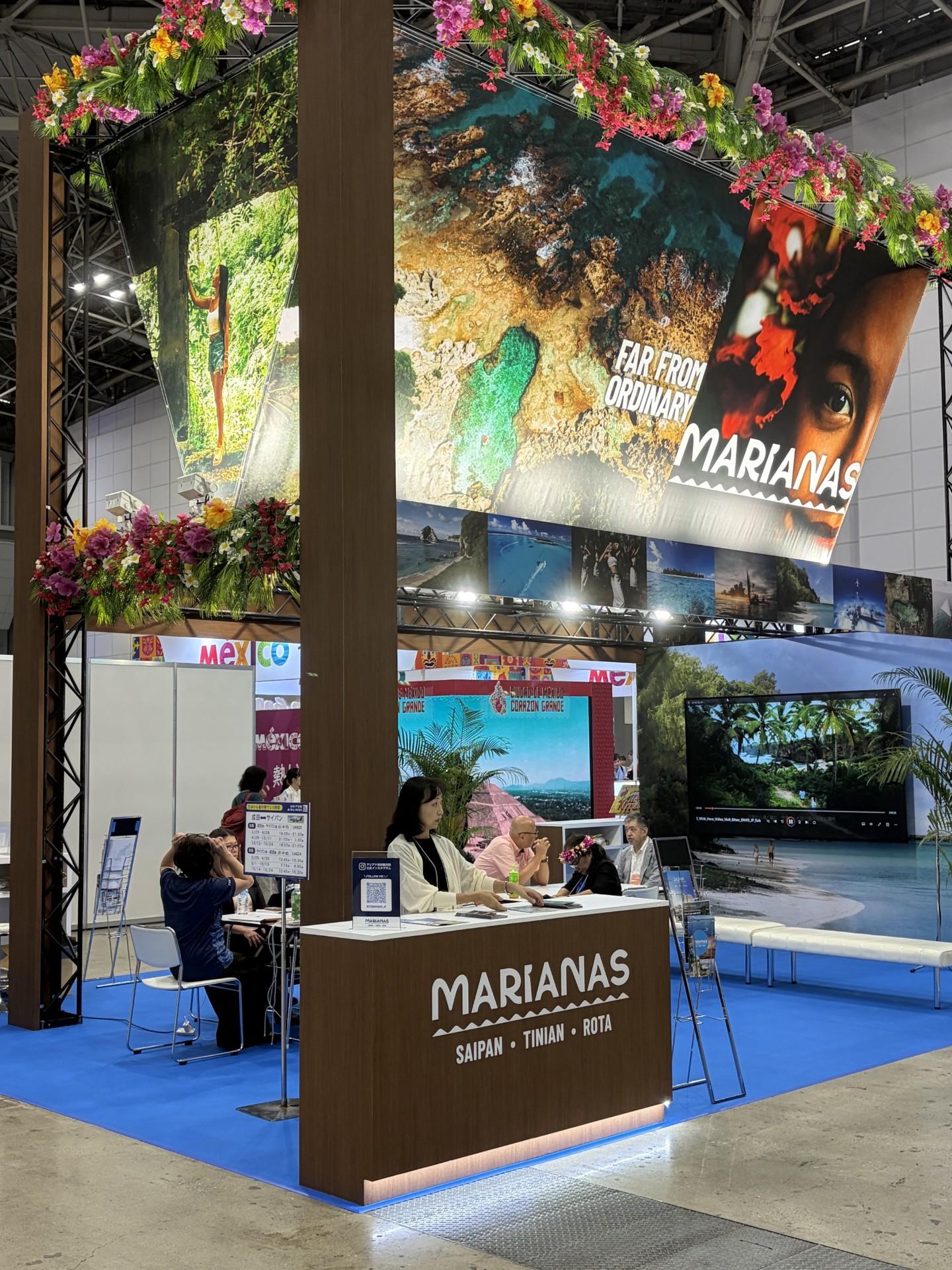
“The super typhoon in mid-April really affected inbound travel and it took us a month to get the airport operational again, which really affected revenue from Japan for that period,” said Judy C. Torres, deputy and acting managing director of the Marianas Visitors Authority.
The weak yen and higher fuel prices have compounded the problem through the summer months, she said “making us an expensive destination for Japanese travelers.”
MVA updated its logo in November and is promoting a message of “Far from Ordinary” to resonate with tourists, Torres said. “We have indigenous culture but we’re also a melting pot of other cultures, we have an underwater museum — there are many reasons to say that we’re far from ordinary.”
Judy C. Torres, deputy and acting managing director of the Marianas Visitors Authority MVA is also highlighting its proximity to Japan and short flight times, its fine weather, beaches, outdoor lifestyle and “being away from the hustle and bustle of city life,” Torres added, all lines that are likely to strike a chord with Japanese travelers.
“We are looking forward to the year-end holiday season and the Chinese lunar new year because we know people see that as a good time to escape the cold weather, be outdoors, go to the beach, play golf,” she said. “I feel this is an opportunity and that there is potential if we can reinforce our relationships with our partners here in Japan and build new connections.” mbj
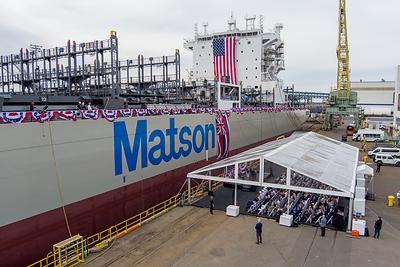
Matson Inc. and Hanwha Philly Shipyard Inc. held a christening ceremony for the Aloha Class Vessel Makua, set to serve Guam in the first quarter of 2027, at the Hanwha Philly Shipyard, Philadelphia on Oct. 12.
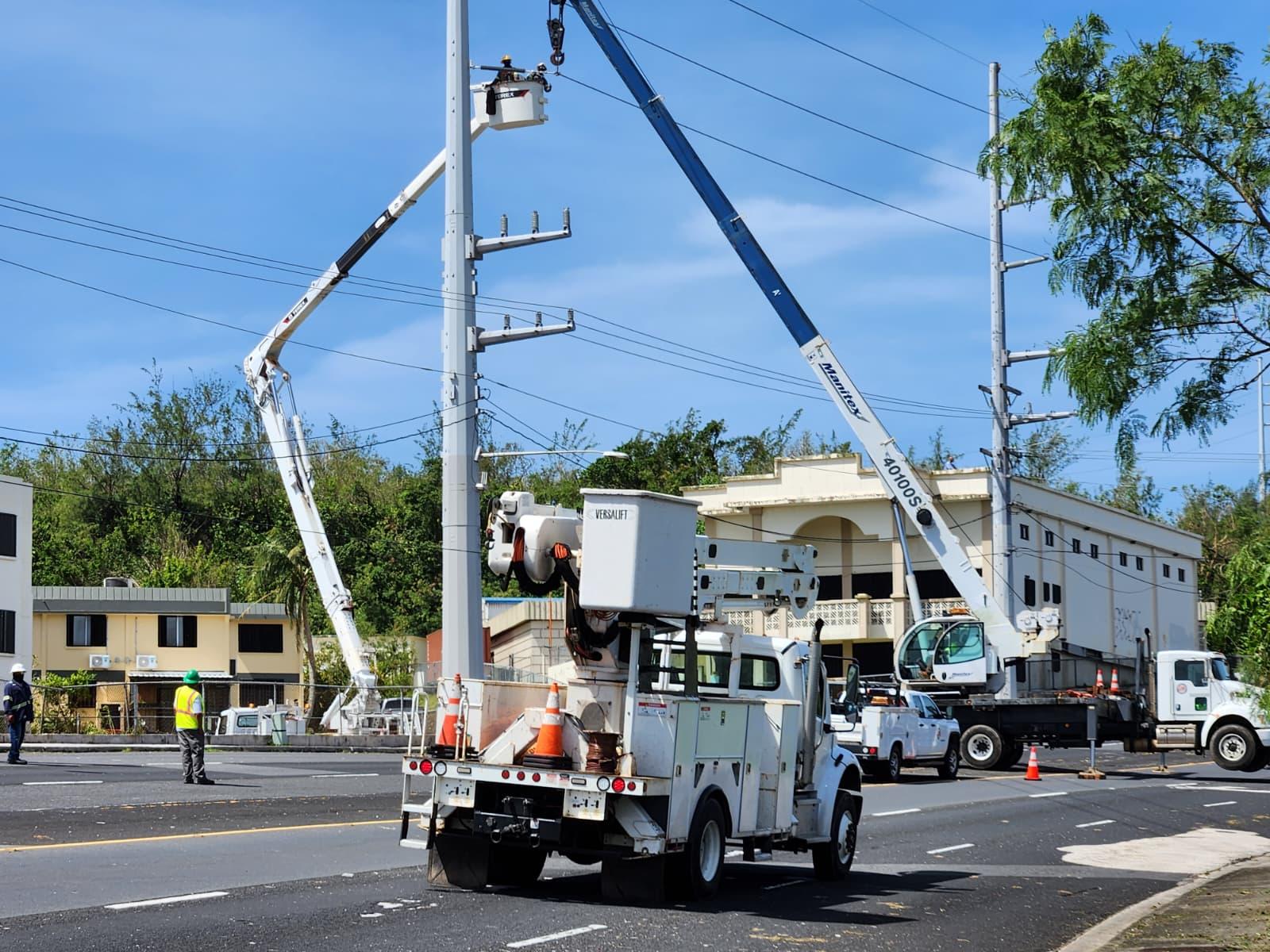
Essential infrastructure, commercial fuel stations, and private health facilities across Guam are swiftly reopening following the passage of Super Typhoon Champi, with key transportation hubs and utility providers moving into full recovery status.
Just hours after Super Typhoon Champi passed south of Guam, President Donald Trump approved Gov. Lourdes A. Leon Guerrero's request for an emergency declaration, which authorizes the Department of Homeland Security's Federal Emergency Management Agency to coordinate emergency assistance.
Typhoon Champi is now expected to be a Category 4 storm, with winds of 130 to 156 mph and gusts of more than 180 mph, when it makes its closest approach to Guam.